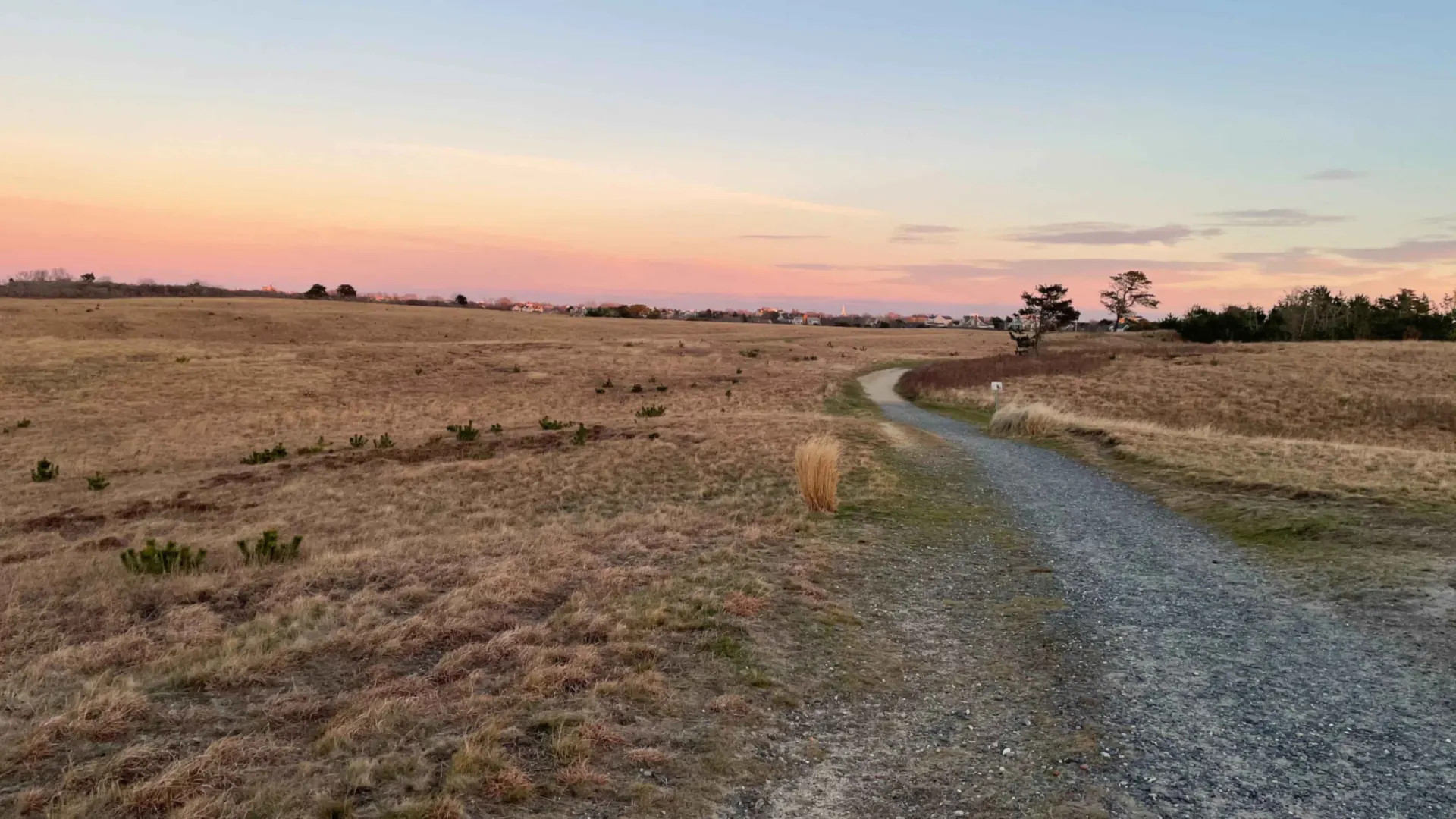
Out past Milestone Road, in the hollow the old-timers still call the Middle Moors, a crew is wading flooded bog in waders this month doing work that has nothing to do with the tourist season, the ferry schedule, or anything else the rest of the island organizes its year around. It has been this way since 1857.
The one harvest that doesn’t check the calendar everyone else lives by
Nantucket empties out every September, and by mid-October the island has settled into the quieter rhythm that owners who are here year-round actually prefer. But a few miles from downtown, at the Nantucket Conservation Foundation’s Milestone Cranberry Bog, nothing about October has changed in more than a century and a half. The bogs get flooded, the berries float free, and a crew works the water until the harvest is in — on a schedule set by the fruit, not by who’s still on the island to see it.
Cranberry farming began at Milestone in 1857, long before anyone thought to call Nantucket a summer colony. Ownership changed hands several times over the next hundred years until 1968, when three islanders — Roy Larsen, Walter Beinecke Jr., and Arthur Dean — bought the bog outright and gave it to the Nantucket Conservation Foundation, which has run it as a working farm, not a museum, ever since. (Source: Yesterday’s Island, “Consider the Cranberry”.)
A family business older than almost any house you’ll tour
What’s easy to miss, driving past the bog on the way to the south shore, is that it’s still exactly that: a family business. Tom Larrabee started as a field hand at Milestone in 1951, became bog manager in 1979, and the operation is now run by his grandson Nick — three generations of the same family, tending the same acreage, through a century of the island changing around them completely. At its largest the cultivated bog covered 234 acres and was, by at least one well-documented account, the single largest contiguous cranberry bog on Earth; today the Foundation actively farms about 195 acres across two dozen individual bogs, with the rest of the property left as moorland, grassland, and freshwater ponds. (Source: Yesterday’s Island, “Consider the Cranberry”.)
None of that is a museum piece kept alive for visitors. It’s a working farm that happens to sit in the middle of some of the most fiercely protected open land on the island, and the harvest it produces — most years, something in the range of two million pounds — gets picked whether the summer houses nearby are full or shuttered.
What permanence actually looks like out here
I spend a lot of my working year talking about what makes a piece of Nantucket worth owning, and most of that conversation is about water views, walkability, square footage. The bog is a reminder that some of the island’s value has nothing to do with any single house at all. Land that the Conservation Foundation holds doesn’t come up for sale, doesn’t get subdivided, and doesn’t change use because a market cycle turned. A property near conserved land — the moors, the bog’s edge, the walking trails that wind around it — comes with a neighbor that simply cannot be redeveloped, which is a kind of certainty no listing description can manufacture.
That’s also, I think, the quieter appeal of October here for the people who already own. The visitors who needed the beach and the restaurants to be open have gone home, and what’s left is an island still doing its actual work: scalloping in the harbor, landscapers finishing the last fall cleanups, and out at Milestone, a crew flooding bog the same way a crew flooded it in the years before the Civil War.
The rhythm worth remembering when you’re not here to see it
You don’t need to time a visit to the harvest to feel the point. It’s enough to know that it’s happening — that somewhere on the far side of the moors, on a schedule nobody in town set and nobody in town controls, the oldest working farm on the island is doing what it has always done in October, with or without an audience. That’s a different kind of Nantucket than the one on the ferry schedule, and it’s worth remembering the next time someone tells you the island shuts down after Labor Day.
If you’re curious what living here actually feels like once the season turns — not just what it costs — I’m always glad to talk it through.