Flying private to Nantucket: what to know about ACK
A good share of the people I show houses to arrive by private aircraft, and the questions are nearly always the same. Where do we go when we land? What does it cost? Can we come straight in from abroad? What happens when the fog rolls in? None of it is complicated, but almost none of it is written down in one place.
What follows is from the airport's own pages, its 2026 Rates and Charges and the FAA's airport record, all read on November 12, 2026. I sell real estate and I am not a pilot. Nothing here is flight planning advice, and the pilot in command and the airport have the last word on all of it.
One airport, one FBO
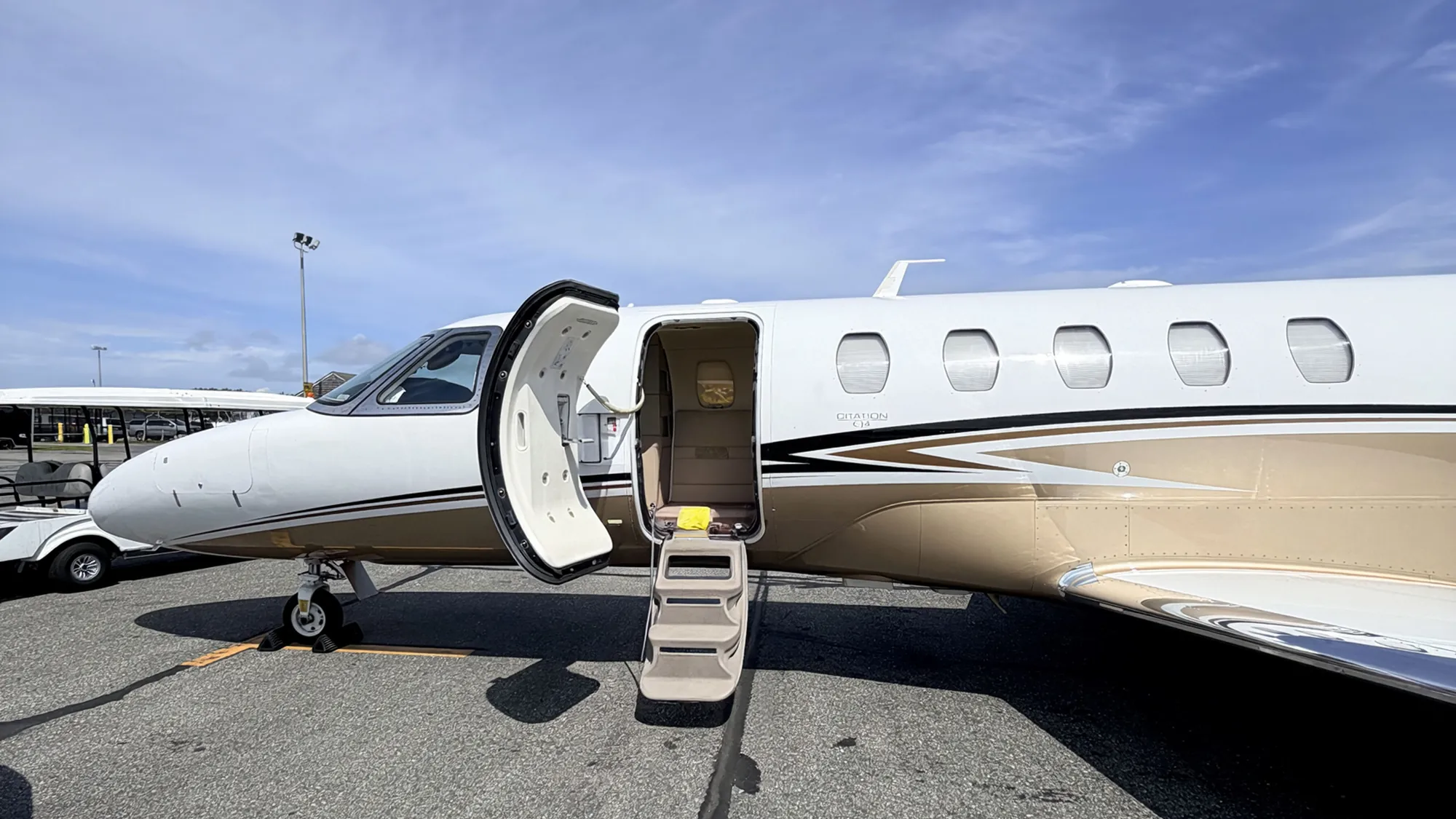
Nantucket Memorial Airport (ACK) is owned by the Town of Nantucket and sits about three miles southeast of Town. The airlines use the main terminal. Private and charter flights use the General Aviation building, where the airport itself runs the only fixed base operator on the island.
That FBO handles parking, fuel (both 100LL and Jet A, from the airport's own fuel farm), ground power, lavatory service and deicing, and it keeps a crew lounge upstairs with workstations, a quiet area and showers. Its hours are 6:00 am to 10:00 pm from May 15 through September 30, and 6:00 am to 9:00 pm the rest of the year. After hours, the airport asks you to call Airport Operations at 508-325-7569. The FBO's own line is 508-325-5307, and it monitors Unicom on 122.95.
Two caterers serve aircraft on the island, and the airport lists a detailing company. The FBO services page has the current names and order lines.
What it costs to land and park in 2026
The airport publishes its fees, which is not true everywhere. The current schedule was adopted on January 13, 2026 and took effect April 1. For a private or on-demand charter flight using the FBO, two fees apply, and both are set by the aircraft's maximum gross takeoff weight.
The landing fee is $8.00 for an aircraft under 6,000 pounds. Above that it is $48.00 plus $3.93 for every 1,000 pounds over 6,000.
The ramp fee is charged per trip, for up to 24 hours:
- Up to 6,000 pounds: $15
- 6,001 to 10,000 pounds: $60
- 10,001 to 15,000 pounds: $129
- 15,001 to 25,000 pounds: $200
- 25,001 to 50,000 pounds: $396
- 50,001 to 100,000 pounds: $676
- Over 100,000 pounds: $1,158
Worked through at round weights, a 12,500-pound aircraft pays about $74 to land and $129 for the day on the ramp. At 20,000 pounds it is about $103 and $200. At 40,000 pounds, about $182 and $396. At 75,000 pounds, about $319 and $676. Stay a second day and the ramp fee applies again.
One thing the fee schedule does not tell you: the ramp fills up in summer. If you are coming on a busy weekend, have your pilot or operator call the FBO ahead and ask whether the aircraft can stay on the island or should drop you and park somewhere else.
For light aircraft there is a break: under 6,000 pounds, the $15 ramp fee is waived for the day with the purchase of 10 gallons of avgas. Ground power is $75 for up to an hour, and lavatory service is $100. Fuel prices change too often to print; the FBO quotes them by phone.
If a car is meeting you, the FBO lot is free for the first three hours, $25 for up to 24 hours and $120 for a week. A vehicle that needs to drive onto the ramp without a permit is escorted, and the $100 escort fee is billed to the aircraft operator.
The runways, the tower and the fog
The FAA's record lists two paved runways. The main one, Runway 6/24, is 6,303 feet long and 150 feet wide, grooved, with an instrument landing system at both ends. The crosswind runway, 15/33, is 4,500 feet by 100.
The control tower is staffed from 6:00 am to 10:00 pm between May 15 and September 30, and until 9:00 pm from October 1 through May 14. The field stays open when the tower is closed, and pilots then turn on the runway lights themselves from the cockpit.
The island's weather is the real constraint. Fog can sit on Nantucket for hours in any season, and it is the reason the main runway has precision approaches at both ends. It is also the reason I tell clients to treat a same-day turnaround as a plan and not a promise. On a day when the aircraft cannot get in, the ferry from Hyannis often can, and the guide to getting here covers both boats.
Four things that surprise first-time visitors
There is no customs on Nantucket. The FAA lists ACK as neither an airport of entry nor a landing rights airport, so a flight arriving from outside the United States clears at another airport first and continues to the island as a domestic leg.
Larger charters need notice. The FAA's record asks for two hours' prior permission, by phone to the airport manager at 508-325-5300, for unscheduled operations by aircraft with more than nine passenger seats.
Some pavement has limits. One taxiway is restricted to aircraft of 12,500 pounds or less, and a section of taxilane is closed to wingspans over 79 feet. The airport diagram and the FBO sort this out on arrival, but it is worth a call ahead for a large aircraft.
The airport is a neighbor. It has noise abatement procedures and a noise officer, reachable at 508-325-5300, and it limits auxiliary power unit use to 15 minutes for all aircraft. Pilots are asked to fly the published procedures. Owners who live near the approach paths notice when they do not.
Chartering in
If you do not own or share an aircraft, the airport lists two charter companies that operate on the island year-round. Gull Air flies between Nantucket and points around New England from the General Aviation building. Tradewind Aviation flies between Nantucket and the New England and New York region from its own lounge at the airport. Other operators fly in on demand from wherever you are starting.
The scheduled airlines are the other half of the picture, and in summer they connect the island nonstop with New York, Boston, Washington and several other cities. The guide to getting here has the carriers and their links.
Keeping an aircraft on the island
For an owner who bases an aircraft here, the airport's schedule sets the cost. A reserved tie-down on the paved ramp is $1,710 a year for an aircraft of 6,000 pounds or less, with $110 added for each additional 1,000 pounds. A reserved tie-down on the grass is $1,030 a year, limited to 6,000 pounds. Tie-down holders are not charged landing or ramp fees on their own non-commercial flights.
Hangar space is priced by the aircraft's footprint. For an aircraft up to 1,000 square feet (wingspan times length), an unheated hangar is $55 a day or $327 a month, and a heated one is $66 a day or $435 a month, with larger aircraft priced up from there. T-hangars are $435 a month. The schedule gives prices, not availability, so ask the airport's administration office at 508-325-5300 what is open before you count on a space.
What it means for where you buy
The airport is ten minutes from Town and not much farther from most of the island, so flying in rarely decides which neighborhood a buyer chooses. What it does change is the rhythm of ownership. A house you can reach by air on a Friday afternoon gets used on ordinary weekends, in October and in March, and that is worth thinking about when you weigh a winterized house against a seasonal one.
Proximity cuts both ways. Every district page on this site lists its drive time to the airport, and the Airport Area page describes what living beside the field is like. If quiet matters to you, ask me where the approach paths run before you fall for a house.