Conservation land on Nantucket: the 40% that shapes every price
The openness is owned
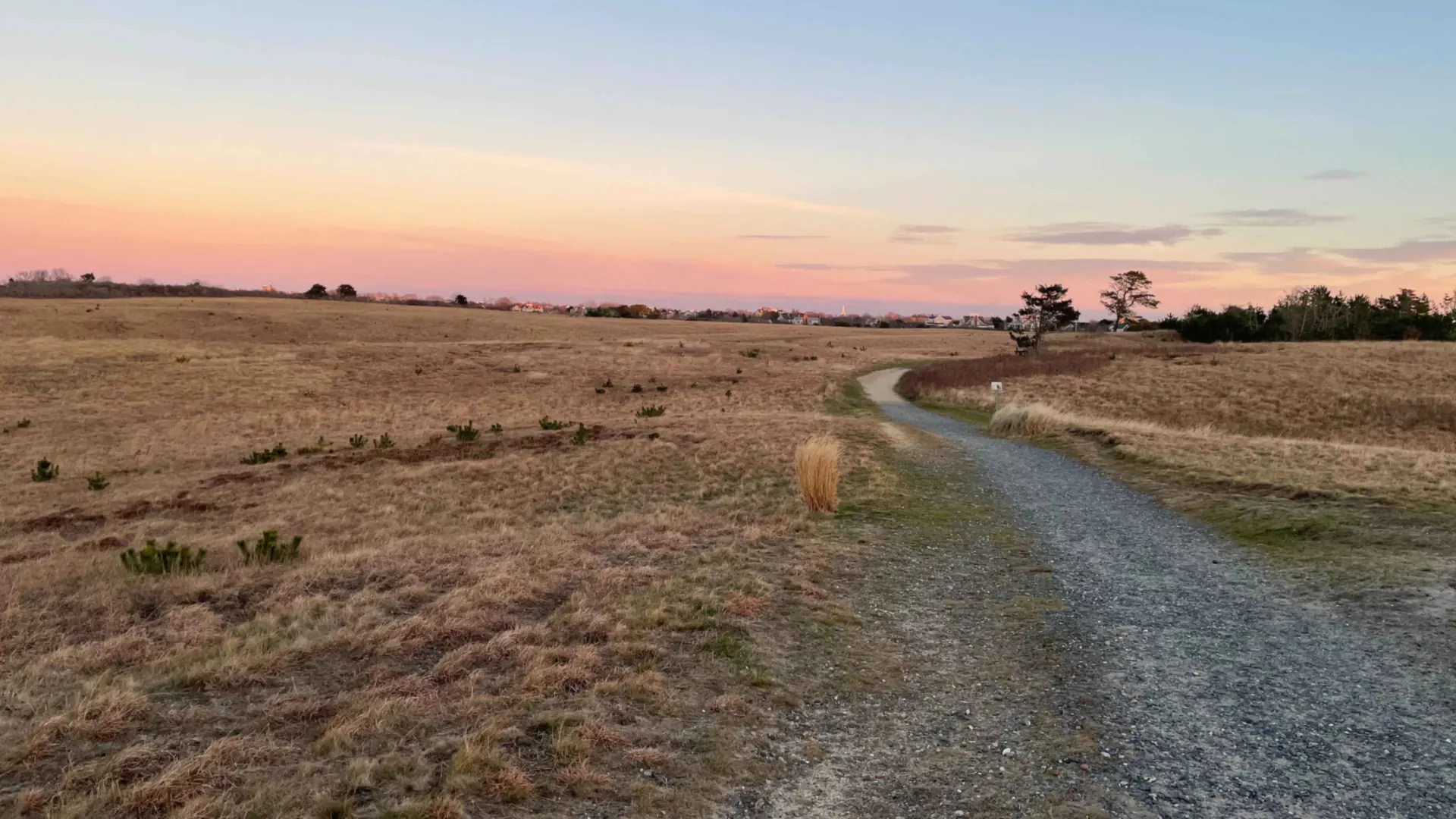
Fly into Nantucket on a clear day and the thing that registers first is not the harbor or the town — it is how much of the island is simply open. Moors running to the horizon, ponds with no docks, beaches with no houses behind them. That openness is not luck and it is not leftover. It is owned, deliberately, by organizations whose entire purpose is to keep it exactly as it is.
More than 40% of Nantucket is permanently protected conservation land. If you are buying here, that number is not trivia — it is the quiet force under every other number on your settlement statement. Here is who owns the open space, what it means when a listing says "abuts conservation," and how to think about it as a buyer. At the top of the market that edge is often the entire thesis — the estates-and-compounds guide picks that thread up.
Who actually owns the moors
What "abuts conservation" actually means
A parcel bordering protected open space enjoys something no fence or hedge can manufacture: a neighbor that will never build, never subdivide, never change. Views over the moors stay views. The privacy is structural, not situational.
But "conservation" is not one thing, and the diligence is knowing which thing:
Who holds the abutting land? A Foundation moor, a Land Bank beach lot, and a town watershed parcel are different neighbors with different publics.
What happens on it? Conservation land is managed, not abandoned. Public walking trails may run close to your line. Habitat management is real work — mowing, brush cutting, and on some properties prescribed burns and managed deer hunts, all announced and organized, but worth knowing about before you are surprised by either.
Where does the public arrive? A trailhead parking area near your driveway is a different experience from a mile of empty heath. Both are wonderful; they are not the same.
All three questions are answerable before you offer: the town's mapping shows the abutting parcel and its owner in minutes, and each organization publishes what it does on the ground it holds. Five minutes of looking beats a season of guessing.
None of this diminishes the premium — abutting protected land is one of the most durable advantages a property here can have. It is simply a premium worth understanding precisely, because you are paying for it.
You can walk almost all of it
The practical joy of the conservation estate is that it is not behind gates. Foundation and Land Bank properties are open to the public — which means the moors at golden hour, the Sanford Farm walk to the south shore, Squam Swamp's boardwalks in the fall, and long stretches of shoreline reached on foot. The beaches guide covers the sand; the interior is its equal and far emptier.
For buyers, this reframes what a neighborhood offers. A cottage in Polpis is not just near the harbor — it is near thousands of acres of walkable moorland. Madaket and Tom Nevers sit against open land that doubles their effective elbow room. When you price a location here, you are pricing its open-space adjacency whether the listing says so or not.
Private land with strings: conservation restrictions
Between fully protected and fully buildable sits a third category: private land under a conservation restriction — a recorded agreement that permanently limits development while the land stays privately owned. You can own, enjoy, and sell restricted land; what you cannot do is build beyond what the restriction allows.
For the right buyer — someone who wants acreage, privacy, and landscape rather than maximum square footage — restricted parcels can be a genuine opportunity, sometimes at a meaningful discount to unrestricted land. For the wrong buyer, they are a trap bought on a misunderstanding. The restriction document is the property; read it, and price what it actually permits. The land guide walks through buildability diligence in full.
What the 40% does to the market
Scarcity on Nantucket is not a marketing line — it is arithmetic. The island is about fourteen miles across. More than 40% of it can never be developed, and the conservation organizations are still acquiring. Every parcel they add permanently subtracts from the island's future supply of buildable land.
That is the structural reason well-located Nantucket property has held value the way it has: demand meets a supply that is not merely limited but shrinking. It is also why the 2% Land Bank fee is the rare closing cost that works for you after you pay it — it funds the very scarcity that supports what you just bought. The buyer's guide puts that math in context.
Conservation land on Nantucket — frequently asked questions
How much of Nantucket is conservation land?
More than 40% of the island is permanently protected open space, held by the Nantucket Conservation Foundation (roughly 9,000 acres), the Nantucket Land Bank, the 'Sconset Trust, Mass Audubon, the Trustees, and the town. The share still grows as organizations acquire more.Can conservation land ever be built on?
No — that is the point. These properties are held in perpetuity for conservation. The practical consequence for buyers is that the supply of buildable land on the island permanently shrinks as protection grows.Does abutting conservation land increase a property's value?
Generally, meaningfully, yes — permanent privacy and protected views are advantages no future neighbor can take away. The smart diligence is knowing who holds the abutting land, how it is managed, and where the public accesses it.Is the public allowed on conservation land?
Almost all of it, yes — Foundation and Land Bank properties are open for walking, and their trail networks cover thousands of acres. It is one of the island's best free amenities and a real part of what a Nantucket address buys.What is a conservation restriction?
A permanent recorded agreement limiting development on private land. The owner keeps title and use; the building envelope is capped. Restricted parcels can be excellent buys for landscape-first buyers — read the restriction itself before pricing one.Who pays for all this protection?
Members and donors fund the private organizations; the Land Bank is funded by the 2% fee buyers pay at nearly every island closing. In effect, every transaction on Nantucket helps purchase the openness that defines it.Looking at a parcel that borders open land?
Sean Kalman is a sixth-generation Nantucketer, a Nantucket REALTOR®, and the founder of The Kalman Co., brokered by eXp Realty. He reads the abutter's deed before he talks about the view. Reach him at sean@thekalmanco.com or 508-228-4578. Equal Housing Opportunity.