Nantucket cottages: the island's smallest houses, and the hardest to change
What the word actually means here
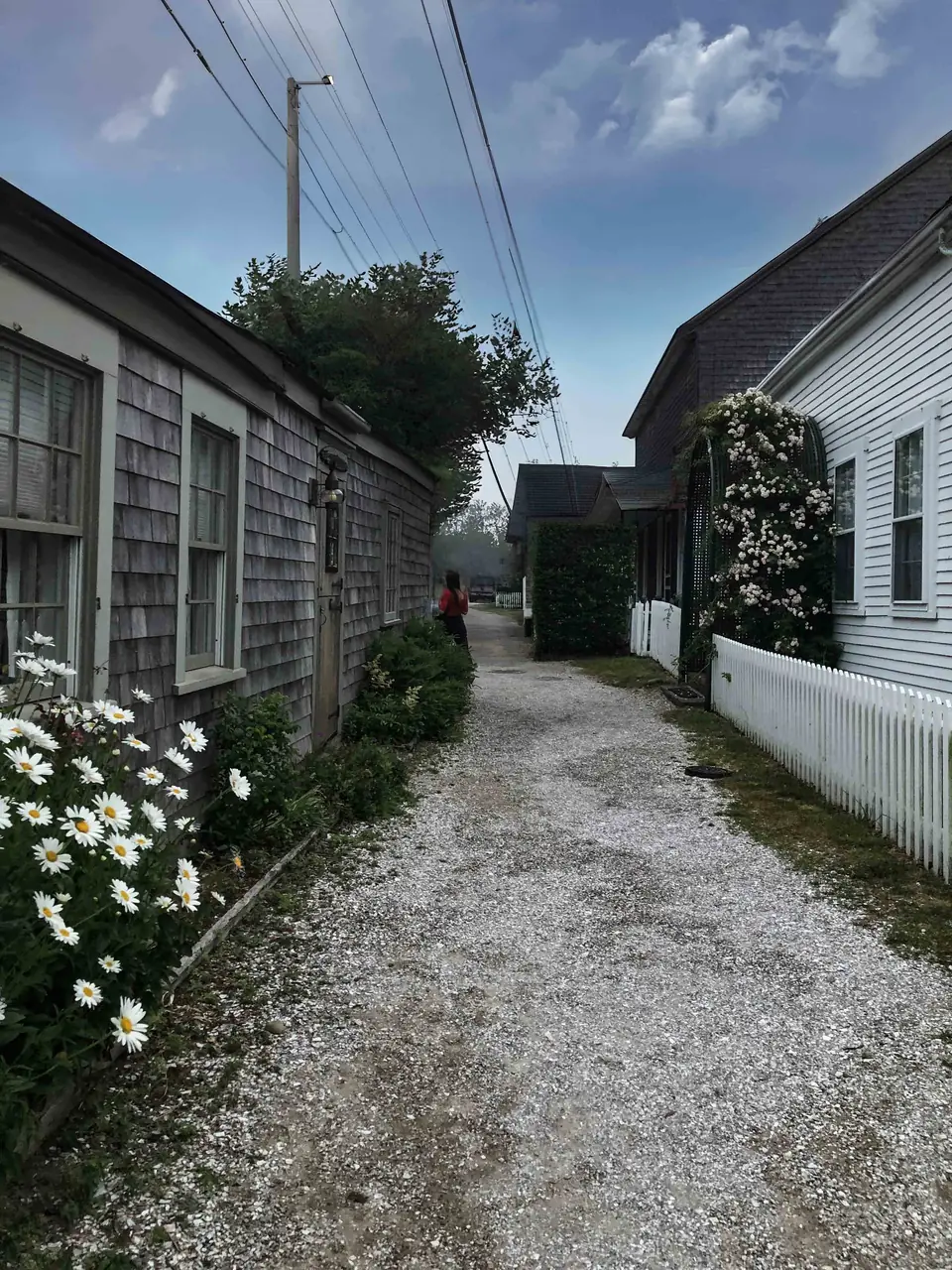
Everywhere else, cottage describes a mood. Here it describes a form. The island's oldest small houses are one story with a sleeping loft above, set on dry stone footings, sheathed in shingle that was never meant to be painted, with low-pitched gables and small-paned windows placed where they were needed rather than where they would look symmetrical. The rooms are few and the ceilings are low, because heat was expensive and framing lumber arrived by boat.
Two centuries of building followed that logic instead of replacing it. The one-and-a-half-story summer cottages that went up from the 1820s onward kept the timber frame and borrowed only the trim from Federal and Greek Revival fashion. The result is an island where a house from 1890 and a house from 1975 can share a silhouette — and where the word cottage points at scale first and age second. If your interest is mainly the entry price rather than the form, our entry-level homes guide is the better starting point.
Shelter for a fishing crew, and then a fashion
'Sconset's whale houses — the cluster along Front, Broadway, Center and Shell Streets — were not built as houses at all. They were shelter for boat crews working the fishing and whaling station at the island's east end, framed on a post-and-beam hanging-loft pattern the Nantucket Historical Association traces back fifteen hundred years to Wales, England and Scotland. Several of those original frames are still standing inside houses people live in today, notably Auld Lang Syne (ca. 1675) and Shanunga (ca. 1682).
The plan was one room, called the hall or great room, with a hole cut in the roof to draw smoke out and let light in; a loft reached by a ladder you could pull up behind you; cooking done outdoors. Houses stood about three feet apart. From the 1820s the village became a summer escape, and the old shelters were expanded, moved and imitated. Between 1879 and 1882 a New York developer named Edward Underhill bought land on the South Bluff and built seventeen rental cottages on Evelyn, Lily and Pochick Streets, deliberately modeled on the fishermen's houses — small enough that he supplied a spare bedroom on wheels for overflow guests. More on the village in our guide to 'Sconset.
Telling an antique cottage from a house dressed as one
A good deal of what gets marketed as a cottage here is a modern house wearing the vocabulary: shingles, a gable, a name on a quarterboard. That is not a criticism — a well-built new small house is often the easier thing to own. It is a different asset, and it should be priced and inspected as one.
The tells are structural. Genuine antique framing shows up as hand-hewn timber, irregular joinery, floor boards of varying width, and rooms whose proportions obey no modern module. Ceilings under seven feet, stairs steeper than today's code allows, and a crawl space where you expected a basement all point the same way. Ask for the building's documented history rather than the listing's adjectives; on this island that record usually exists, and our historic homes guide covers how to verify it.
What a small old house asks of you
More than a new house at the same price, and in different currencies.
The sills come first. A house sitting close to grade on stone or a shallow foundation, in an ocean climate, has spent centuries in conversation with moisture. Rot at the sill and the base of the posts is common, repairable and expensive. Bring someone who has done that work before, not someone who has read about it.
Then the systems. Antique cottages were retrofitted for plumbing, wiring and heat in whatever decade the owner could afford it, and the work tends to be layered rather than replaced. Undersized electrical service, orphaned old wiring, and heating equipment past its useful life are ordinary findings — not deal-breakers, but they belong in your number before you write the offer. The island inspection guide covers what sits outside the standard inspection's scope.
Then the daily geometry. Low ceilings, tight stair treads, doorways you will learn to duck, and no basement to absorb the mechanical equipment, the laundry, or the things a household accumulates. Some buyers find that delightful for exactly one season. The ones who stay are the ones who wanted it in the first place.
Whether you can make it bigger
Zoning sets the footprint. Nantucket's zoning bylaw assigns every district a ground cover ratio — the share of the lot that buildings may cover. The spread is wide: 40% of lot area in the dense R-5 district, 12.5% in R-20, and 4% in LUG-2, under the bylaw's intensity table. Multiply your lot area by your district's ratio and you have your ceiling. On a small in-town lot with a cottage already standing, that number is often close to what is already built. The zoning guide runs the full table.
The septic system caps the bedrooms. Massachusetts Title 5 sizes a system at 110 gallons per day per bedroom, and Nantucket's Board of Health decides what counts as a bedroom on its own terms: any private space of at least 70 square feet with a window, ventilation and power, and a ceiling of at least seven feet in an existing house. Any private room with direct access to a full bath counts, whatever the plans label it, and each structure on the lot is counted separately. Adding a bedroom generally means upgrading the system — and the yard may not have room for it. More on Title 5 here.
The Historic District Commission decides what it looks like. The entire island, along with Tuckernuck and Muskeget — roughly 30,000 acres — is a designated historic district, and no exterior architectural feature may be created or altered without a Certificate of Appropriateness. That reaches additions, windows, doors, siding, roofing, color, fences, driveways and mechanical equipment. Inside the town and 'Sconset historic cores, abutter notification is triggered by new construction of as little as 100 square feet, against 1,000 square feet elsewhere. Our HDC guide walks the process.
Heating a house that was built for July
Many island cottages were seasonal for most of their lives, and the building shows it: little or no insulation in the walls, single-glazed sash, plumbing run through unconditioned crawl space. Year-round use is achievable and routinely done, but it is a project — air sealing, insulation where the framing and the HDC allow it, freeze protection for the pipes, and a heating system sized for a house that leaks. Ask the seller for actual winter fuel bills rather than an estimate.
Renting it out, and what the town asks first
A small cottage in a walkable village makes a strong seasonal rental, and many owners offset carrying costs that way. The town regulates it closely. Any rental of 31 consecutive days or fewer is a short-term rental under the Town Code (Chapter 123) and the Board of Health and Select Board regulations (Chapter 338); rentals totaling 14 days or fewer in a calendar year are exempt. Each dwelling unit needs its own certificate, registered first with the state through MassTaxConnect and then with the town, renewed annually in the town's fall renewal window, which closes October 31 — with evidence of $1,000,000 liability coverage. The certificate and visitor emergency information must be posted inside the unit, occupancy is capped at two people per bedroom plus two, and both the Massachusetts and Nantucket certificate numbers must appear in any advertising.
And the fact that matters most to a buyer: the certificate does not run with the land. Under Town Code § 123-3G it is issued to the operator, so when a short-term rental is sold, the registration does not transfer — the new owner files a new application. If rental income is part of the plan, budget the registration sequence into the first season rather than assuming you inherit the seller's. Note too that the code prohibits short-term rentals in units owned by corporations, partnerships or similar pooled-investment entities, which is worth knowing before you decide how to take title.
Since the November 2025 Special Town Meeting, short-term rental is an express principal use in the zoning bylaw — permitted in every district except Commercial Industrial, conditioned on full compliance with Chapters 123 and 338. Full requirements here.
Where the cottages actually are
'Sconset is the obvious answer and the right one. The whale houses sit in the village core along Front, Broadway, Center and Shell Streets. Underhill's rental cottages line Evelyn, Lily and Pochick on the South Bluff. Codfish Park, below the bank, grew from fishing shacks into dwellings as the beach widened after the land passed to the Proprietors of Nantucket in 1886.
Town has its own version: small antique houses on the narrow lanes of the Old Historic District, where lots are tight and the ground cover ratio is generous enough that most of the allowance is already spent. Beyond those two concentrations, small houses turn up across the island. There the arithmetic usually runs the other way — lots are larger, ground cover is rarely the binding limit, and what governs an addition is the septic system and the HDC.
Small houses trade quietly here
Cottages are the part of the market where the difference between a good buy and a hard one is almost entirely diligence: what the frame is doing, what the system will carry, and what the Commission will let you do next. Tell Sean what you want the house to be in five years, and he will tell you which cottages can get there.
Nantucket cottages — frequently asked questions
What counts as a cottage on Nantucket?
There is no legal definition — it is a form, not a category. In practice it means a small, shingled, timber-framed house of one or one-and-a-half stories with low ceilings, a compact footprint, and few rooms. The oldest examples descend from 'Sconset's seventeenth-century fishing shelters. Newer houses often borrow the silhouette without the framing.Can I add on to an antique cottage?
Sometimes, and never quickly. Three things have to line up: your zoning district's ground cover ratio has to leave unused footprint, the septic system has to support any added bedroom under Title 5, and the Historic District Commission has to issue a Certificate of Appropriateness for the exterior. In the historic cores, review is at its most exacting.Do I need HDC approval to change windows or paint color?
Yes. The whole island is a designated historic district, and no structure may be altered in a way that affects or creates exterior architectural features without a Certificate of Appropriateness first. That includes windows, doors, siding, roofing, color, fences, driveways and mechanical equipment. Your interior — kitchen, baths, layout, systems — is not reviewed.How many bedrooms can a small cottage have?
Whatever the septic system is designed to carry, at 110 gallons per day per bedroom under Title 5. Nantucket's Board of Health counts bedrooms by its own definition: any private space of 70 square feet or more with a window, ventilation and power, and at least a seven-foot ceiling in an existing house. Labels on the plans do not control.Can I rent my cottage out in the summer?
Yes, with registration. Rentals of 31 consecutive days or fewer require a short-term rental certificate — state registration through MassTaxConnect, then a town certificate for each dwelling unit, renewed annually, with $1,000,000 liability coverage. Rentals totaling 14 days or fewer per calendar year are exempt. Certificate numbers must appear in every advertisement — and the certificate does not transfer with a sale: a buyer files a new application.Is a cottage a better value than a newer small house?
It depends what you are buying it for. An antique cottage carries history, a village location that cannot be replicated, and real maintenance obligations. A newer small house is usually cheaper to run and easier to modify. Price both against the same question: what will you be permitted to do with it later?Tell Sean what the house should be in five years
Sean Kalman is a sixth-generation Nantucketer, a Nantucket REALTOR®, and the founder of The Kalman Co., brokered by eXp Realty. He measures cottages in sills, systems and certificates before square feet, because that is the order the island checks them in. Reach him at sean@thekalmanco.com or 508-228-4578. Regulatory details current as of August 2026 and subject to change at Town Meeting; confirm requirements with the Town before relying on them. Equal Housing Opportunity.