Your Nantucket home inspection is looking for different things
Thirty miles of open Atlantic changes the checklist
You have probably done this before. An inspector walks the house for three hours, you follow along with coffee, and a report lands that evening with a hundred photographs and a summary page. The format is the same on Nantucket. The findings are not.
Thirty miles of open Atlantic changes what goes wrong in a building, and it changes what you should be paying an inspector to look at. Massachusetts sets the floor for what a licensed inspection has to include. The island decides what actually matters. Here is the difference, and where the two most consequential inspections on Nantucket sit entirely outside the one you booked.
Where a licensed inspector's job actually ends
Massachusetts licenses home inspectors through the Board of Registration of Home Inspectors, and their standards of practice live in 266 CMR 6.00. Two things in that regulation shape your whole due-diligence plan.
First, the inspection is explicitly "visual and not Technically Exhaustive." Nobody is opening walls.
Second, 266 CMR 6.05 lists what an inspector is not required to do, and the list reads like a table of contents for island problems: radon, asbestos, mold, lead paint, wood-destroying insects, water quality and well systems, septic systems, underground storage tanks, and subsurface soil conditions. All of it sits outside the base inspection unless you contract for it separately.
That is not a criticism of inspectors. It is the shape of the job. It means the standard inspection is your starting point, not your finish line, and on Nantucket the two findings most likely to move real money — the septic system and the well — are never in it.
One quirk worth knowing before you start making calls: Massachusetts law (M.G.L. c. 112, § 87YY½) bars the brokerage side selling you the house from steering you to a specific home inspector — on request, they hand you the complete state-prepared list of licensed inspectors instead. If the listing agent gives you a list rather than a name, that is the law working, not evasion. The statute carves out one relationship: a broker working exclusively for the buyer under a written agreement may recommend inspectors by name — one more reason representation matters here. Our Nantucket buyer's guide walks the rest of the sequence.
The septic inspection is the one with legal teeth
The sale itself is the trigger. A system must be inspected at or within two years before transfer of title, or within three years if the report comes with records of annual pumping. If weather genuinely prevents it, the inspection happens as soon as conditions allow — and never later than six months after transfer. A complete copy goes to the buyer, and results go to the Nantucket Health Department within 30 days on the state's form.
There are exemptions. Transfers between spouses, between parents and children, between full siblings, and into revocable trusts benefiting first-degree relatives are carved out. Condominium and cooperative facilities of five or more units are inspected every three years rather than at each transfer.
The inspector is separately credentialed. A MassDEP-approved System Inspector under 310 CMR 15.340 — professional engineers with a civil, sanitary or environmental concentration, registered sanitarians and certified health officers qualify automatically; everyone else takes the state course and exam.
Failure is defined, not judged on vibes. Under 310 CMR 15.303, a system fails for sewage backing up, effluent breaking out to the ground or surface water, liquid standing above the outlet invert in the distribution box, a cesspool with less than six inches of depth below the inlet pipe invert, a system needing pumping more than four times a year, and a range of setback problems near wells and surface waters. When a system fails, 310 CMR 15.305 gives the owner two years from discovery to upgrade — shorter if the local authority finds an imminent health hazard.
Then Nantucket adds its own layer, because the Board of Health concluded Title 5 alone was not enough here — the island's rapid infiltration rates, tidal groundwater movement, coastal flooding and shifting sand all cut against it. Local Regulation 64 governs on-site sewage disposal, Regulation 59 handles upgrade deferrals, and Regulation 65 sets I/A system testing and sampling. Watershed protection districts add more: within the Madaket Harbor Watershed Protection District Zones A and B, conventional systems are inspected every five years with reports filed to the Health Department, and as of July 1, 2026 conventional systems in the Hummock Pond watershed’s Zones A and B run on their own five-year cycle. In all three harbor watershed districts — Nantucket, Madaket, and Hummock Pond — a property transfer itself can require stepping up to a nitrogen-reducing system. We go deeper on all of it in the Nantucket Title 5 and septic guide.
If the house is on a private well, start that clock immediately
Nantucket sits on a sole source aquifer — EPA designated it in 1984 — which is exactly why the town regulates private wells hard.
Since January 1, 2024, Chapter 386, Section VIII(4) of the town's regulations has required private well water quality testing before the sale of a property. The water has to meet current Massachusetts primary and secondary drinking water standards, the sample has to go to a MassDEP or EPA certified laboratory, and results are filed with the Board of Health.
The part that catches people is timing. The town runs its sampling through the Barnstable County Laboratory, samples are dropped at Health and Human Services on Tuesday mornings between 7:30 and 9:00, routine and real-estate kits take up to 14 business days — and PFAS results take up to six weeks. Six weeks will outrun a tidy 30-day close. Order the well test the week you go under agreement, not the week the inspection report lands.
Salt air is patient, and it never stops working
Nothing here corrodes dramatically. It corrodes quietly, everywhere, at once.
Look at the outdoor condensing unit and its coil fins, at exterior disconnects and panel lugs, at fasteners, strapping and hardware holding the frame together, at garage door springs and tracks, at generator enclosures, at the metal parts of exterior lighting. A house two blocks from the water and a house on a bluff age at genuinely different rates.
Ask your inspector directly what they could and could not see. Under the state standards they are not required to insert any tool, probe or testing device inside electrical panels, and they are not required to walk a roof unless it is safe to do so. Those are reasonable limits — but "no deficiencies noted" and "I never got a look" are very different sentences, and only one of them is in the report.
A house that sleeps through winter breathes differently
Most of the island's housing stock is closed up for months. A seasonal house is a sealed box with no one running exhaust fans, no one noticing a slow supply-line drip, and no one wondering why the crawl space smells like a beach.
Moisture is the root cause behind most of what buyers find alarming here. Mold is a symptom; the water is the problem. Since mold is outside the licensed inspector's scope entirely, decide early whether you want a moisture-focused specialist to look at crawl spaces, sill areas, unvented basements and the north side of the building.
Heating deserves its own conversation. If you are looking in the shoulder season at a winterized house, the system may be drained down — and a drained system cannot be run, so it cannot be tested. Inspectors also are not required to operate equipment in conditions that would make it unsafe. Ask when the system was last fired, whether the house is heated through winter or drained each fall, and what freeze protection exists: low-temperature alarms, remote monitoring, whether anyone actually checks on it in February.
Cedar shingles, weather, and a design review board
Cedar is the right material for this climate and it still wears. Sidewall shingles silver and last a long time. Roof shingles take UV, wind-driven rain and freeze-thaw, and they go in a more specific way: cupping, splitting, and fasteners corroding out from underneath while the shingle above still looks fine.
Ask how the roof was examined — walked, viewed from a ladder, glassed from the ground, or flown. Then remember that on Nantucket, replacing it is not purely a contractor decision. The island has been a local historic district since 1955, one of the first two in Massachusetts, extended to the entire island in 1971, and it was designated a National Historic Landmark district on November 13, 1966. Exterior work runs through review. Budget the calendar, not just the cost. Our page on Nantucket historic homes covers how that process actually goes.
Old bones ask better questions
Nantucket's concentration of early housing stock is the reason people come, and it is the reason the inspection list gets longer.
The hazards you only find by testing
Radon is not part of a Massachusetts home inspection. The Department of Public Health recommends every home be tested, but no state or federal law requires it. The EPA's guidance is to fix a home at 4 pCi/L or above and to consider fixing between 2 and 4 — and the EPA is explicit that its county radon zone map should not be used to decide whether an individual house gets tested. Test the house in front of you.
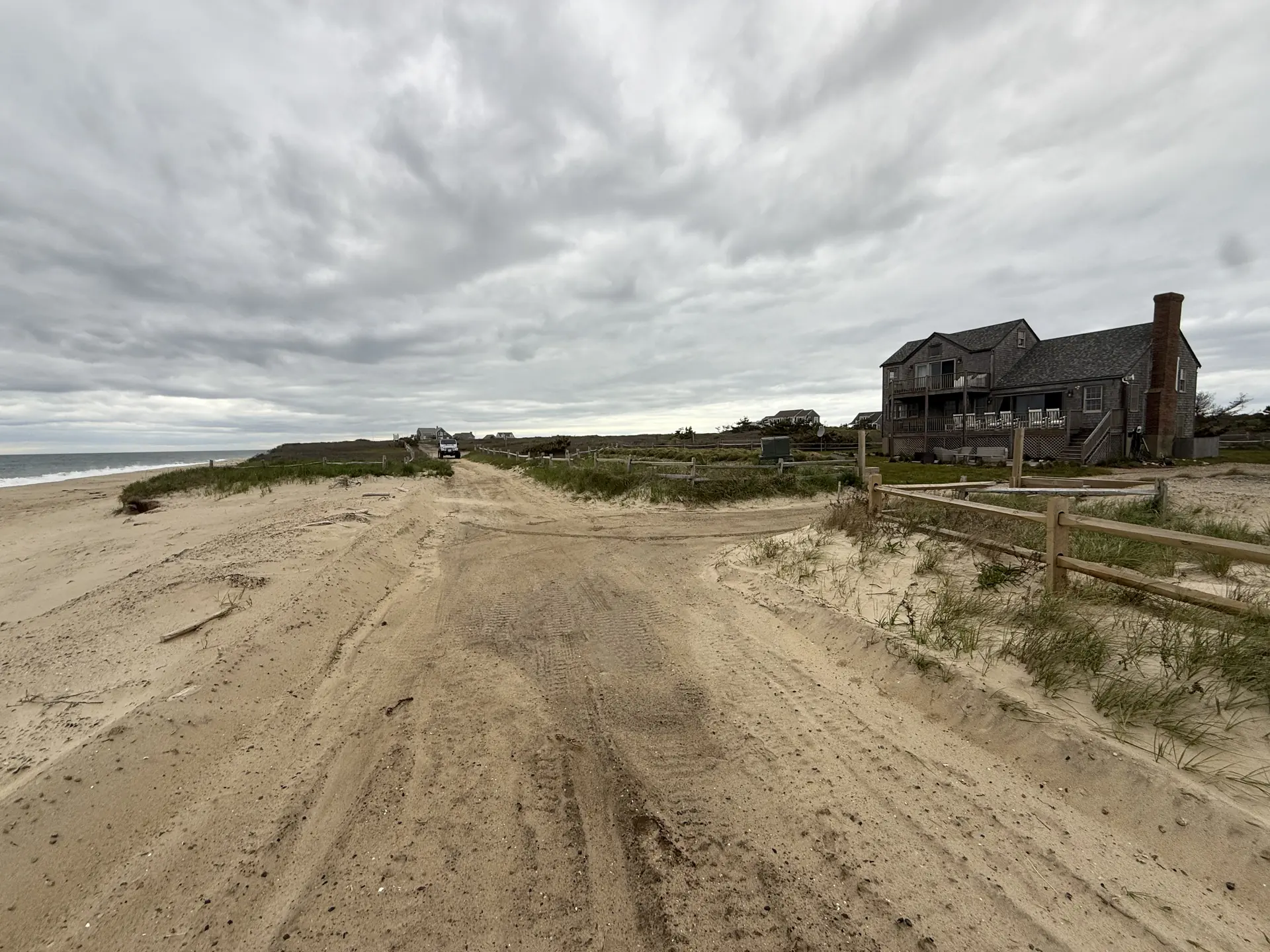
And for anything near a bank, a dune or a marsh, the building is only half the question. Subsurface and soil conditions are excluded from the home inspection, which means shoreline stability, setback history and flood exposure are separate work with separate specialists. Start with Nantucket coastal erosion and flood zones and insurance before you write the offer, not after the report.
In high summer, the constraint is the calendar
Here is the honest island problem. Every trade you might want during due diligence — septic inspector, well sampler, structural engineer, roofer, mold specialist — is the same small pool of people working the busiest weeks of their year, and some of them come over on a boat.
So sequence backward from the close. Book the Title 5 inspection and the well test the day you go under agreement, because both are required and neither depends on what the home inspection finds. Run the general inspection early enough that specialist follow-ups still fit. And build the ferry into the timeline when you are working from the mainland — buying from off-island is its own discipline.
What you do with the report is the whole point
A good report is long. That is not the same as a bad house.
Sort findings into three piles. Maintenance you were always going to do. Deferred work with a real number attached. And consequences — things that change what the property is or what it costs to hold.
Only the third pile belongs in a negotiation. A failed Title 5 is the clearest example: the two-year upgrade clock under 310 CMR 15.305 starts at discovery, which is why sellers generally resolve it at the table rather than hand a buyer a countdown. Get a written scope and a real quote before you ask for anything, because "the septic needs work" is not a negotiating position and a bid from a licensed installer is.
Then decide what you actually want — price, credit, repair before closing, or escrow — and ask for one of them clearly. Sellers respond to specificity. Inspections on Nantucket are not scarier than anywhere else. They are just longer, more sequential, and less forgiving of a late start. Do them in the right order and almost nothing here is a surprise.
Nantucket home inspections — frequently asked questions
Is a home inspection required when buying on Nantucket?
No. A general home inspection is your choice as a buyer. A Title 5 septic inspection is different — under 310 CMR 15.000, systems must be inspected at or within two years before transfer of title, with limited exemptions. And since January 1, 2024, town Chapter 386 has required private well water quality testing before a sale. Those two are requirements; the home inspection is leverage.Does the home inspection include the septic system?
It does not. Massachusetts standards of practice at 266 CMR 6.05 expressly exclude septic systems, wells, water quality and underground items from the licensed home inspection. Title 5 inspections must be performed by a MassDEP-approved System Inspector under 310 CMR 15.340 — professional engineers in civil, sanitary or environmental practice, registered sanitarians, certified health officers, or others who pass the state course and exam.What happens if the septic system fails its Title 5 inspection?
Failure criteria are defined in 310 CMR 15.303 — sewage backup, effluent breaking out, cesspool depth, pumping more than four times a year, setback problems near wells and surface waters. Once a failure is discovered, 310 CMR 15.305 requires an upgrade within two years, sooner if the local authority finds an imminent health hazard. In practice, most sellers address it before closing.How long does well testing take on Nantucket?
Longer than buyers expect. The town's program runs samples through the Barnstable County Laboratory, dropped Tuesday mornings between 7:30 and 9:00. Routine and real-estate kits take up to 14 business days. PFAS results take up to six weeks. Order testing the week you go under agreement rather than waiting on the home inspection report, or the lab will set your closing date.Should I test for radon in a Nantucket house?
Yes. Radon is excluded from the licensed home inspection, and no Massachusetts law requires testing, but the Department of Public Health recommends every home be tested. The EPA advises fixing at 4 pCi/L or higher and considering it between 2 and 4, and says its county zone map should never be used to decide whether an individual home needs a test.What should I look at differently in a pre-1850 Nantucket house?
Early wiring, lead paint, asbestos, plaster condition and sill rot — none of which are inside the standard inspection's scope. Massachusetts requires lead hazards to be removed or covered in pre-1978 homes where a child under six lives, and the EPA's Renovation, Repair and Painting rule requires certified firms for most renovation work in pre-1978 housing. Plan specialists, and plan historic review for exterior work.Sequence the inspections before the island sequences you
Sean Kalman is a sixth-generation Nantucketer, a Nantucket REALTOR®, and the founder of The Kalman Co., brokered by eXp Realty. He books the Title 5 and the well test the day his buyers go under agreement, because on this island the lab schedule can outrun the closing date. Reach him at sean@thekalmanco.com or 508-228-4578. Regulatory citations current as of August 2026; rules change, so confirm requirements with the Nantucket Health Department before relying on them. Equal Housing Opportunity.