Historic homes on Nantucket: the real thing, and what it asks of you
Claimed everywhere, documented here
Every coastal town in New England claims historic charm. Nantucket holds the documentation: an entire island designated a National Historic Landmark, with one of the finest surviving collections of pre-Civil War architecture in the country concentrated in its core — whale-oil-era captains' houses, half-house cottages on brick lanes, and village rows in 'Sconset that began as fishing shacks in the 1600s.
That is not wallpaper. It is a distinct segment of this market, with its own buyer, its own diligence, and its own rewards. This page is about buying the real thing.
Where the houses come from
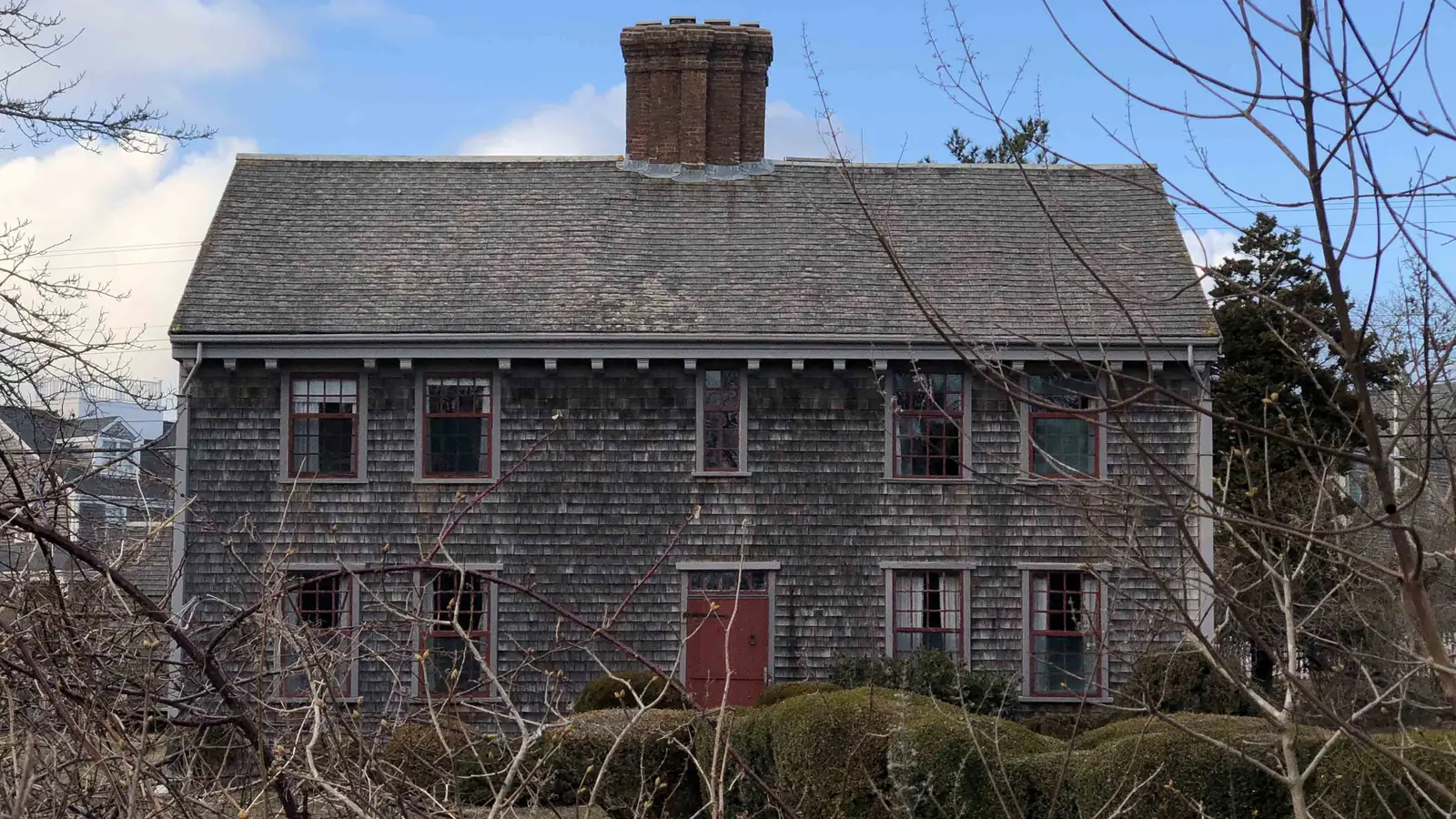
The short version of three centuries: the island's earliest surviving architecture is 17th-century English — the Jethro Coffin House on Sunset Hill, built in 1686 as a wedding gift and now the Nantucket Historical Association's "Oldest House," is believed to be the island's oldest residence still on its original site. The Quaker island that followed built plainly and well: shingled lean-tos and "typical Nantucket" houses whose restraint still defines the island's eye.
Then whale oil made this, for a time, one of the wealthiest communities on earth — and the money built upward. The Federal and Greek Revival mansions of upper Main Street, Orange Street, Pleasant and Fair Streets are whaling fortunes rendered in brick and clapboard: scale, ceiling heights, and provenance that have anchored the island's trophy market for nearly two centuries. When the whale fishery collapsed, Nantucket went poor — and poverty, ironically, was the great preservationist. Nobody could afford to tear anything down and rebuild in the fashion of the day. The island slept until summer people rediscovered it, and by then its streetscapes were irreplaceable.
Since 1955 the Historic District Commission has kept it that way — a story the HDC guide tells in full, and the house-style post decodes architecturally.
The types you'll actually meet
What ownership actually asks of you
Buying one well
Antique construction is honest about its age if you know where to look, and a Nantucket historic purchase wants diligence tuned to old frames:
None of this is a warning. The best-kept 200-year-old house on this island is a better building than most things built last decade — it has already survived everything the Atlantic thought to try. It's the same preparation discipline as the rest of the buyer's guide, tuned for age.
How they trade
Slowly, and on their own terms. The great houses change hands a handful of times a century — estate transitions, family decisions, the occasional quiet approach that never becomes a listing — and when one does reach the open market it draws attention far beyond the island. Documented provenance behaves like waterfront frontage here: it is the thing that cannot be added later, and the market prices it going in and coming out.
The practical consequences for a buyer: comparables are thin, so pricing a historic house is an exercise in judgment rather than spreadsheet math; patience is a real advantage, because the right house tends to surface on its schedule rather than yours; and saying specifically what you're looking for matters more in this segment than any other — a meaningful share of these houses trade between people who simply knew to ask.
On the way out, the same forces work for you. A historic house with a clean HDC file, honest maintenance, and its character intact competes in a category with almost no substitutes — the island stopped making them around 1850.
See what's on the market in the historic core
Historic Nantucket homes — frequently asked questions
What counts as a historic home here?
Formally, the whole island is a National Historic Landmark district, so every house sits under historic-district review. In market practice, "historic" means the antique housing stock — 17th-to-19th-century houses in the old Town core, 'Sconset village, and scattered early houses island-wide.Can I renovate a historic Nantucket home?
Yes — continuously and extensively, within the HDC's exterior review. Interiors are not reviewed at all. The workable rule: the street face changes slowly, everything behind it is negotiable, and good architects here know exactly where that line runs.Are captains' houses a good investment?
They are the island's ultimate scarce asset — genuinely irreplaceable, protected by regulation, and traded rarely. They reward long holds and real stewardship budgets rather than quick math. Provenance carries a premium on resale for the same reason it costs one going in.What should an inspection cover on an antique home?
Structure (sills, frame, foundation), moisture history, chimney and masonry condition, systems age, and the HDC file. Use an inspector experienced with antique construction — the island has them.Are historic homes harder to insure?
They take more care to insure well — replacement-cost conversations are genuinely different for antique construction. It's a diligence item, not a dealbreaker; get the quote during your contingency period — the home insurance guide explains the market you're quoting into.If a house with a history is the point
Sean Kalman is a sixth-generation Nantucketer, a Nantucket REALTOR®, and the founder of The Kalman Co., brokered by eXp Realty. He'll tell you which historic houses are the real thing — and what the real thing actually asks of an owner. Reach him at sean@thekalmanco.com or 508-228-4578. Equal Housing Opportunity.