Private roads on Nantucket: who fixes the road you live on
Buyers from the mainland tend to assume a road is a road: the town owns it, plows it and fills the potholes. On Nantucket that's true of the streets the town has formally taken, and not of the rest. Some of the island's most sought-after addresses sit at the end of a sandy lane that belongs, legally, to the people who live along it. I've driven these roads my whole life. Here's how they work.
What makes a road public on Nantucket
A road isn't public because it's paved, because it has a street sign, or because everyone drives on it. Under Massachusetts law, a town way isn't established until its layout has been filed with the town clerk and then accepted by the voters at Town Meeting. The town's Roads and Right of Way Committee describes the local version in three words: taken, accepted, recorded. When all three are done, the town is responsible for keeping the road in repair and clearing the snow.
Anything short of that is private. The committee's own history of island roads says it plainly: subdivision roads that were never taken, accepted and recorded are private roads, however heavily travelled, and the town's annual budget doesn't fund their repair or their snow removal. More than once, it notes, the town began taking a way and never finished the steps, which left it private.
There are a lot of these roads because, for generations, the town chose not to take on the cost and liability that come with a public way.
The kinds of road you'll run into
- Public ways: taken, accepted and recorded. The town maintains them.
- Private subdivision roads: shown on a recorded plan and used by everyone who lives there, but never accepted by the town. The owners along them, or their association, keep them up.
- Proprietors' roads: laid out in 1821 by the Proprietors of the Common and Undivided Land, around the ponds and swamps and along the shore. They were private roads set aside for public use, and the ones the town never took remain private.
- Abutters' ways: narrow lanes between properties, often leading toward a beach. The owner on each side owns to the middle.
- Paper streets: roads drawn on an old subdivision plan and never built. The land speculation of the 1870s and 1880s left the island with plenty of them.
Who owns the ground under a private road
Usually the neighbors do. Under a Massachusetts statute, a deed to land that abuts a way, public or private, is read to include whatever the seller owned in the way itself, generally to the center line, unless the deed says otherwise.
Owning a strip of the road isn't the same as having the right to drive its whole length. That right is an easement, and it's the thing that matters. A buyer needs a recorded right of access from the nearest public road to the driveway, over every stretch in between. Confirming that is part of the title exam, and it's your attorney's job, not a guess from a map.
Who pays to keep it passable
The people who use it. That's the default. It takes one of three forms: an association with dues, common in subdivisions; a recorded road maintenance agreement among the owners; or a handshake, where the neighbors split the grader's bill each year. The handshake works until someone new moves in or someone stops paying.
State law gives owners a fallback. Where four or more owners share a private way, three of them can ask the town clerk to call a meeting of all the owners. The meeting can decide what repairs are needed and what share each owner pays, and an owner who refuses is liable for that share with ten percent interest. It's old and rarely used, but it exists, and an attorney can explain how it would apply.
The town has two bylaws, and both end with the owners paying. State law lets a town adopt a bylaw for temporary repairs on private ways, and Nantucket has one. As published in the town code, it covers minor work: grading, scraping, and filling holes with sand or gravel, not rebuilding or resurfacing. It takes a petition from abutters who own at least half of the road's length, the road has to have been open to public use for at least two years, and the Select Board may charge the cost back to the abutters and ask for a deposit first. A second bylaw allows permanent work, such as paving and curbing, when the Select Board finds that public convenience and necessity require it, with the cost divided among the owners who benefit. How often either is used is a question for the Department of Public Works.
Snow on a private road
State law allows a town that has accepted the relevant statute to spend public money plowing private ways that are open to public use and that its Select Board has designated. The town's published snow policy lists its priorities as main streets, downtown and the bike paths to the schools first, secondary streets next, and low-volume town-owned residential streets last. It doesn't mention private roads.
So assume the plowing is yours until the Department of Public Works tells you otherwise, and ask the neighbors who they hire.
What a dirt road is like in March
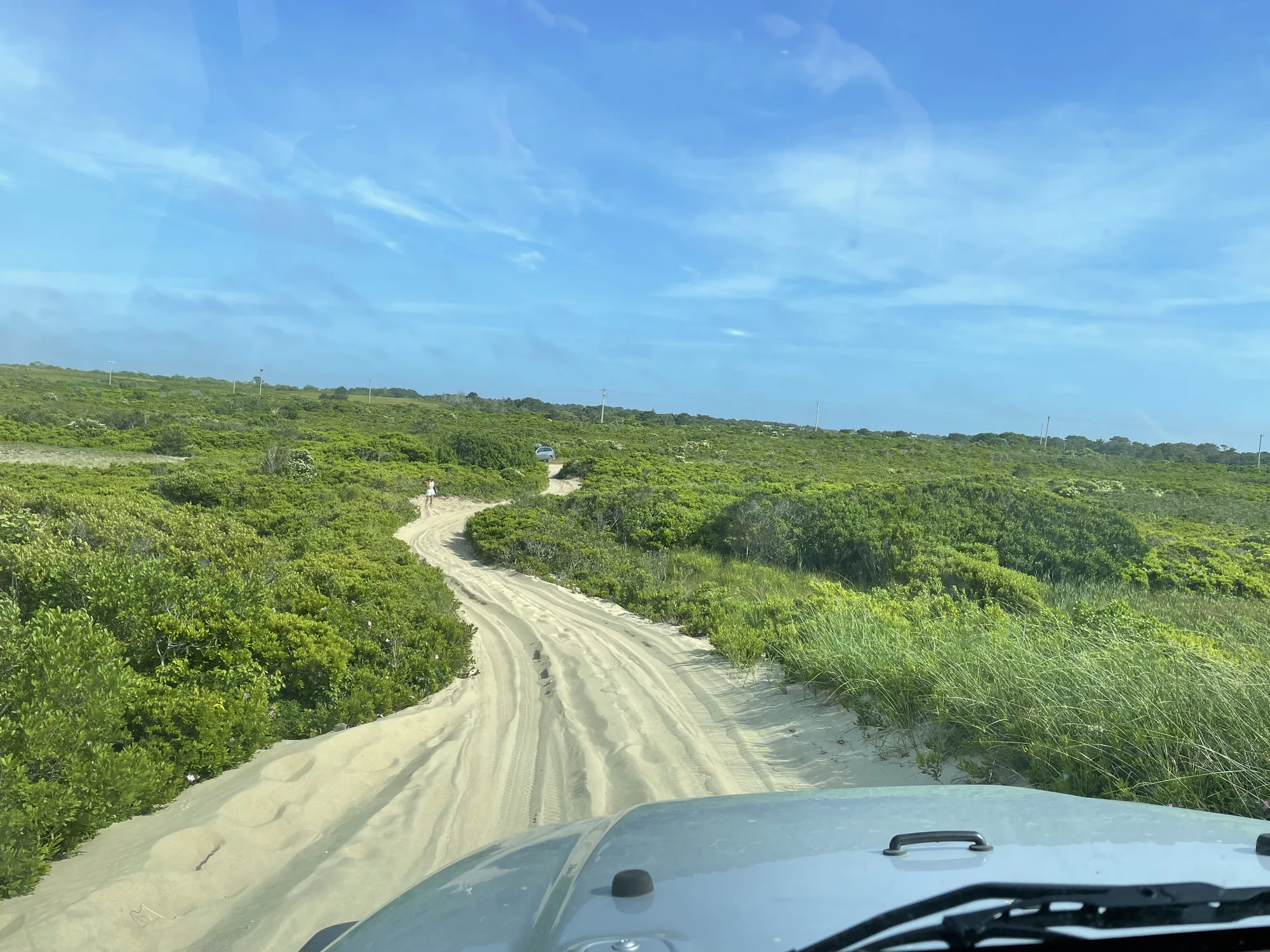
A sandy lane in July is one of the pleasures of the island. After a winter of rain and frost the same lane can be a string of potholes until someone grades it. Ask when that happens, who arranges it and how the bill is split.
Think about the vehicles that aren't yours, too. A fuel truck, a moving van, an ambulance and a fire engine all need to get down the road in any season. Look at the width, the brush at the edges and the low spots that hold water. If you're buying from off-island, see the road in the off-season or ask me to drive it for you.
None of this is a knock on unpaved roads. In Pocomo, Shimmo, Squam, Dionis, Eel Point and Madequecham they're part of the character.
What a lender and a title attorney look for
Fannie Mae's guide for lenders addresses this directly. For a house on a privately maintained street it asks for an adequate, legally enforceable maintenance agreement that covers who pays for repairs and in what shares, what happens when someone doesn't pay, and a term that binds future owners, and it wants the agreement recorded. There are exceptions, and a lender can proceed without one at its own risk. Jumbo and portfolio lenders set their own rules, so ask your lender early.
Your attorney looks for the recorded access easement, the plan that shows the road, and any association documents or road agreement. If nothing is in writing, better to learn it during the inspection period than the week before closing.
What to ask before you make an offer
These belong with the diligence checks on any island purchase.
- Is the road public or private, for the whole route from the nearest public road to the driveway?
- Is there a recorded right of access to the property?
- Is there an association or a recorded road agreement? What are the dues, and is a large project such as paving or drainage being discussed?
- Who grades and who plows, and what did it cost the seller last year?
- Will my lender want a road maintenance agreement?
- Can delivery and emergency vehicles get in year-round?
- If you're buying land: does the way give the lot the frontage zoning requires? Ask the town and your attorney before you design anything.
To find out which kind of road you're on, start with the town. The Roads and Right of Way Committee posts a list of public roads that runs segment by segment, because a road can be public for one stretch and private for the next. It's an older list, so confirm with the Department of Public Works or the Town Clerk, then ask the seller for anything in writing.
If you're selling a house on a private road
Have the road paperwork ready before you list: the association documents or maintenance agreement, the current dues, last year's grading and plowing costs, and who does the work. A buyer's lender may ask for the agreement, and the buyer's attorney will ask about access. If your road runs on a handshake, talk to your attorney and neighbors about putting it in writing while nobody has a deadline.