Salt, wind, sandy soil and deer decide what lives on a Nantucket property. What that means for buyers, owners, and anyone planning a garden here.
There is a particular disappointment I have watched several times now. Someone closes in the spring, spends real money on a landscape plan in May, and by the following March half of it is gone. Not neglected. Not underwatered. Just gone, in the way things go when they were never going to make it here.
Nantucket does not landscape like the mainland. It is thirty miles out in the Atlantic, and everything about the growing conditions follows from that one fact.
The wind writes the first draft
Stand on the south shore in a steady blow and you can taste the salt. That spray carries inland further than people expect, and it burns the new growth on anything that has not evolved to take it. You can see where the line falls without measuring anything. Look at the cedars: on exposed ground they lean, they thin on the windward side, and they grow into that swept, one-shouldered shape that photographs beautifully and tells you exactly what the prevailing wind has been doing for forty years.
That shape is the site telling you what it will tolerate. Plant something tall and soft in front of it and the wind will prune it for you, badly.
The practical consequence is that height is expensive here and shelter is the whole game. Almost every established Nantucket garden you admire is working behind something: a hedge, a fence, a rise in the land, the house itself. The planting is not the achievement. The windbreak is.
Sand is not soil
Most of this island is glacial outwash, which is a geologist’s way of saying sand. It drains fast, it holds almost nothing, and it is acidic.
Fast drainage sounds like a virtue until you watch what it does in a dry stretch. Water goes straight through. Nutrients go with it. A bed that would coast for a week in Connecticut will be in trouble here in three days, which is why irrigation shows up on so many properties and why the water conversation and the garden conversation turn out to be the same conversation.
The acidity is the reason for the thing everyone photographs. Nantucket’s hydrangeas run blue because acidic soil makes aluminum available to the plant. Nobody dyes them. The island does it. Try to force pink out of them and you are fighting the ground itself.
The deer have opinions
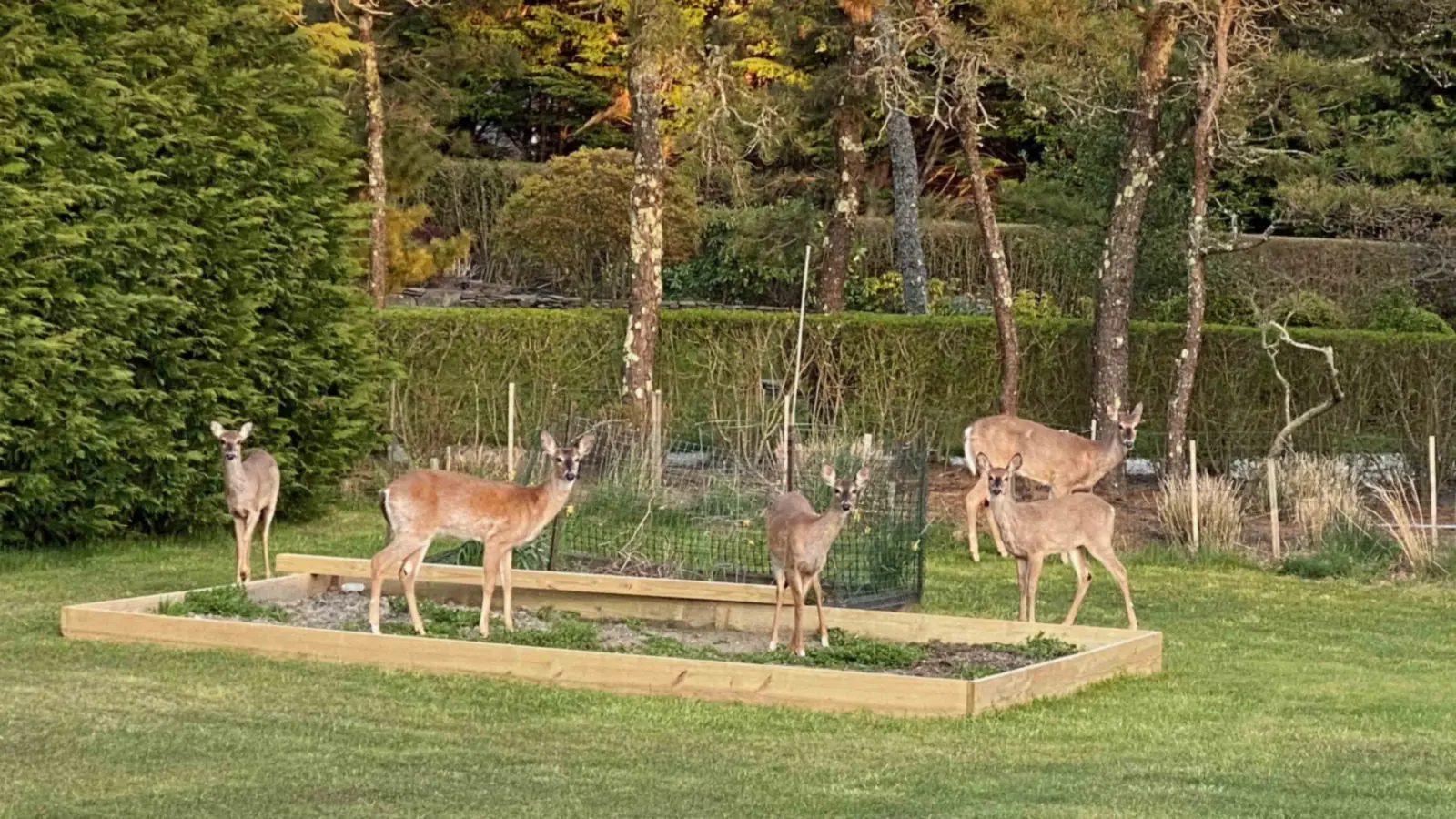
The island carries a lot of deer, and they have worked out what is on the menu. Anything tender, anything newly planted, hostas and daylilies and young shoots of nearly everything, is at risk unless it is fenced, sprayed on a schedule, or simply not the sort of thing a deer wants.
Owners land in one of two camps. Some fence and accept the look and the expense. Others give up on the fight and plant what the deer walk past. The second group spends far less time thinking about it.
There is a public health footnote here that belongs in any honest version of this conversation: the deer population is bound up with the island’s tick and Lyme picture, and how you handle the edges of your property, the tall grass and the brush line, is part of that. It is worth a real conversation with a local landscaper rather than a paragraph from me.
What the island plants instead
The list of things that genuinely thrive here is shorter than a mainland nursery catalogue and better than it sounds.
Bayberry, which holds a bank, smells like the island, and does not care about salt. Beach plum, which flowers white in May and gives you jelly in September if you beat everyone else to it. Bearberry as a groundcover on the sandy exposed spots where nothing else will knit together. Little bluestem and switchgrass, which move in the wind instead of fighting it and hold their color into winter. Eastern red cedar, the tree already doing the work all over the moors. Rosa rugosa along the edges, which needs no introduction and very little help.
Then the cultivated island vocabulary on top of that: privet hedges, the boxwood and hydrangea combination that reads as Nantucket from fifty feet, climbing roses on a south wall, and the grass paths that make a small lot feel considered.
The houses whose grounds look effortless are almost always the ones working with this list rather than against it. Effortless is the wrong word for it, but it is the impression, and the impression is worth a lot when a property comes to market.
Why any of this belongs in a real estate conversation
Two reasons, and both are practical.
The first is that mature planting is genuinely hard to buy. A privet hedge at height, a windbreak that actually breaks wind, a specimen tree that has already survived twenty winters out here: those took time that a new owner cannot compress. When I walk a property with a buyer, established landscaping is one of the things I point at, because it is one of the few features on a Nantucket lot that money alone will not produce quickly.
The second is that grounds are a running cost, and buyers routinely underestimate it. Irrigation, deer management, spring cleanup, and the replacement of whatever did not make the winter are annual line items, not one-time ones. If you are building a picture of what a house costs to hold, the garden belongs in it alongside the insurance and the caretaking.
A good week to go look
The Conservation Foundation is running a native plant landscaping tour on Thursday morning at their Cliff Road grounds, walking through what they did to their own landscape: pulling invasives, building a biodiversity meadow, putting in garden beds. It is the most direct way I know to see this list of plants actually installed and grown in rather than described.
If you want to understand what your property could look like in ten years, an hour there will teach you more than any catalogue.
If you are looking at a house here and want a straight answer about what it will take to keep, call me at 508-228-4578.