Building new on Nantucket: the honest path from lot to house
The house that doesn't exist yet
Every year, a certain kind of buyer arrives at the same conclusion: the house they want on Nantucket does not exist yet. Sometimes they are right, and building is the answer. Sometimes a standing house six months from perfect would have gotten them there two years sooner. This page is the honest map for telling those cases apart — and for what the building path actually involves if you take it.
The short version: you can absolutely build a new house on Nantucket, people do it every year, and the results include some of the best houses on the island. But this is the most regulated, most logistical building environment most buyers will ever touch, and the difference between a good experience and a cautionary tale is almost always how honestly the path was understood at the start.
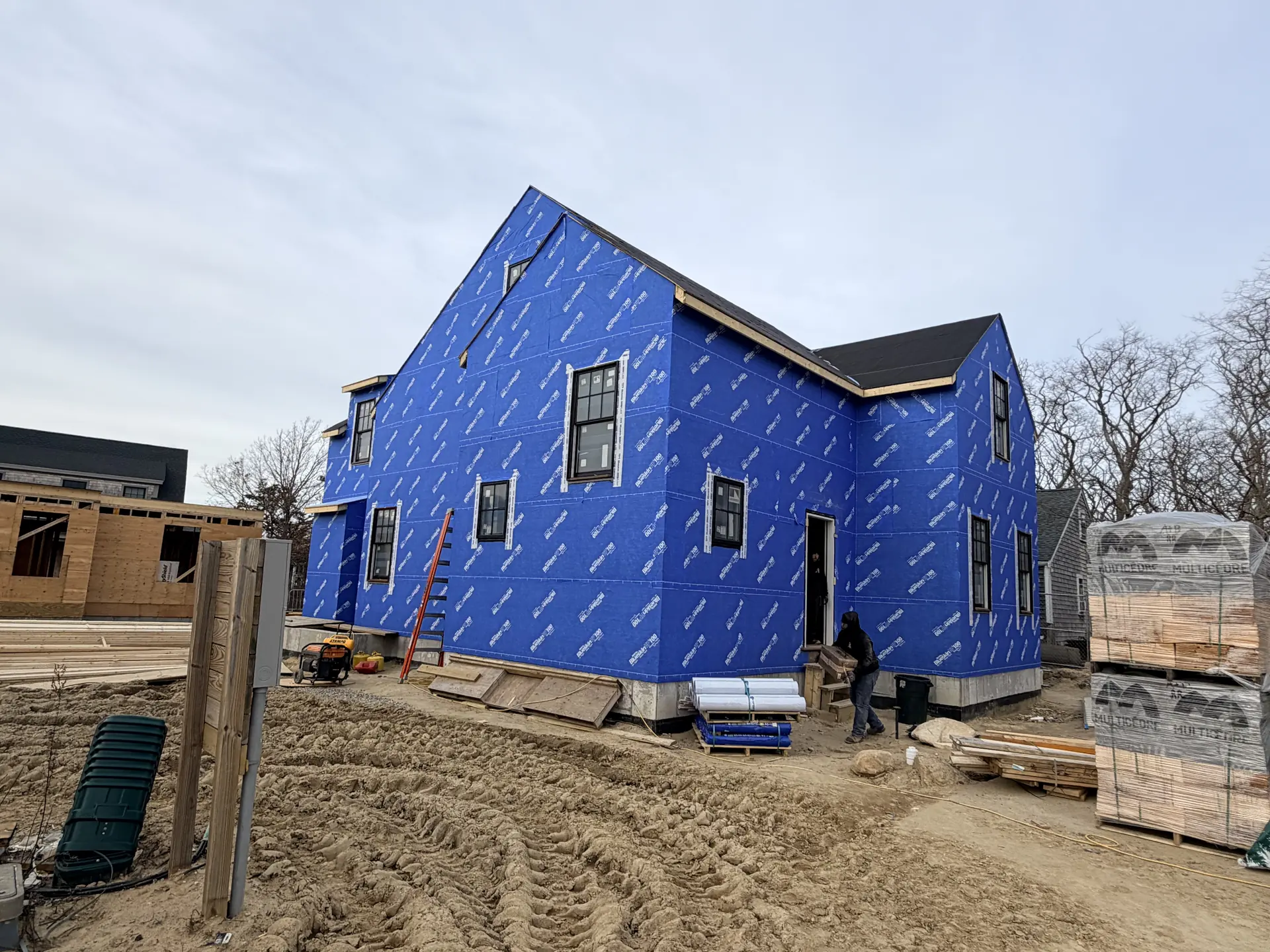
Why building here is genuinely different
The approvals, in the order they actually happen
1. Know the lot first. Survey, soils, wetlands mapping, zoning district, ground cover ratio — the share of the lot your structures may cover. This diligence layer decides what is possible; the land guide covers it in full — and if the program is a multi-structure compound, the estates guide frames the zoning-and-septic envelope.
2. Wastewater. On unsewered land, septic design leads — soils and system capacity shape the house you can permit, bedroom by bedroom. The Title 5 guide explains why bedrooms are the currency.
3. Conservation Commission, if wetlands or their buffers touch the parcel — common near ponds, shore, and low ground. Setbacks here can quietly redraw your buildable envelope.
4. HDC review. Massing, materials, windows, roofline — the island's architectural vocabulary is enforced, and experienced local architects design inside it fluently the first time.
5. Building permit and construction. The paperwork ends; the boat schedule begins.
Run in order, the process is navigable and predictable. Run out of order — a house designed before the septic capacity is known, an offer made before the wetland line is mapped — it produces surprises that cost real money.
The timeline question, answered honestly
How long does it take? Longer than the mainland, and anyone who quotes you a precise number before knowing your lot is guessing. The honest framing is seasons, not months: design and approvals are commonly a season or more, construction commonly spans more than one, and the variables that stretch it — review cycles, builder start dates, the boat — are mostly outside your control.
What you can control is sequencing and preparation: a complete application moves faster than a revised one, an experienced island architect meets fewer surprises, and a realistic start date beats an optimistic one that slips. Plan the build as a chapter, not an errand, and it stops being stressful.
Spec, custom, or standing house?
The island's builders also build on their own account, and the spec market — new houses built to sell — is a real alternative worth pricing against a custom build. What a good spec gets you: island-appropriate design, systems and finishes chosen by people who build here for a living, and — above all — time. You buy the finished chapter.
What custom gets you: exactly your house. The premium is measured in seasons and in decisions — hundreds of them, made from off-island, usually by phone.
And the third option deserves honest billing: a renovation of a standing house. The bones exist, the approvals shrink, and on this island an existing structure in the right spot is often the scarcest asset of all. Note that going the other way — removing a structure to clear a lot — is itself reviewed; demolition on Nantucket is a permission, not a default.
Where new construction clusters is also worth knowing: areas like Surfside and Tom Nevers, with larger lots and later development history, carry much of the island's newer housing stock — useful hunting ground for spec buyers.
The money conversation
Building on Nantucket costs meaningfully more than building on the mainland — freight, labor, review cycles, and the finish level the market expects all stack. Precise numbers belong to a specific lot, a specific design, and a specific builder's calendar, which is why the only honest budget is one built from real bids during diligence, not a per-square-foot figure from the internet.
Two grounding rules: carry a contingency you would be comfortable spending, and remember the flood and insurance layer if the lot is coastal — elevation and zone shape both the build and the carrying cost. The rest of the purchase math lives in the buyer's guide.
Building on Nantucket — frequently asked questions
Can I build a modern-style house on Nantucket?
Within the island's architectural vocabulary — yes, and some of the island's best contemporary houses prove it. The HDC reviews exterior design island-wide, so modern here reads as proportion, glass, and restraint inside the shingle-and-trim tradition rather than against it.How long does it take to build a house here?
Honestly: longer than the mainland, and it depends on the lot, the review path, and your builder's calendar. Think in seasons rather than months, and treat any precise promise made before those are known as optimism.Do I need a local architect and builder?
You need people who know the island's review process, suppliers, and logistics — in practice that means experienced island professionals or off-island firms that partner with them. The learning curve here is real, and you don't want to fund someone else's.What is a ground cover ratio?
Each zoning district caps the share of a lot that structures may cover. It is one of the first numbers to check on any lot, because it — together with septic capacity and setbacks — defines the house you can actually build.Is a spec home worth it?
Often, yes — you trade customization for time, and time on Nantucket is expensive. A well-built spec in the right location is a finished chapter; judge it on location and build quality, and price it against what a custom build would cost you in both dollars and seasons.Can I tear down an old house and build new?
Sometimes — but demolition is reviewed on Nantucket, not assumed, and historic structures carry real protection. Ask before you buy a property whose value to you depends on removing what stands on it.Thinking about building?
Sean Kalman is a sixth-generation Nantucketer, a Nantucket REALTOR®, and the founder of The Kalman Co., brokered by eXp Realty. He has watched the same lot make one buyer happy and another miserable — the difference was what they knew before they offered. Reach him at sean@thekalmanco.com or 508-228-4578. Equal Housing Opportunity.