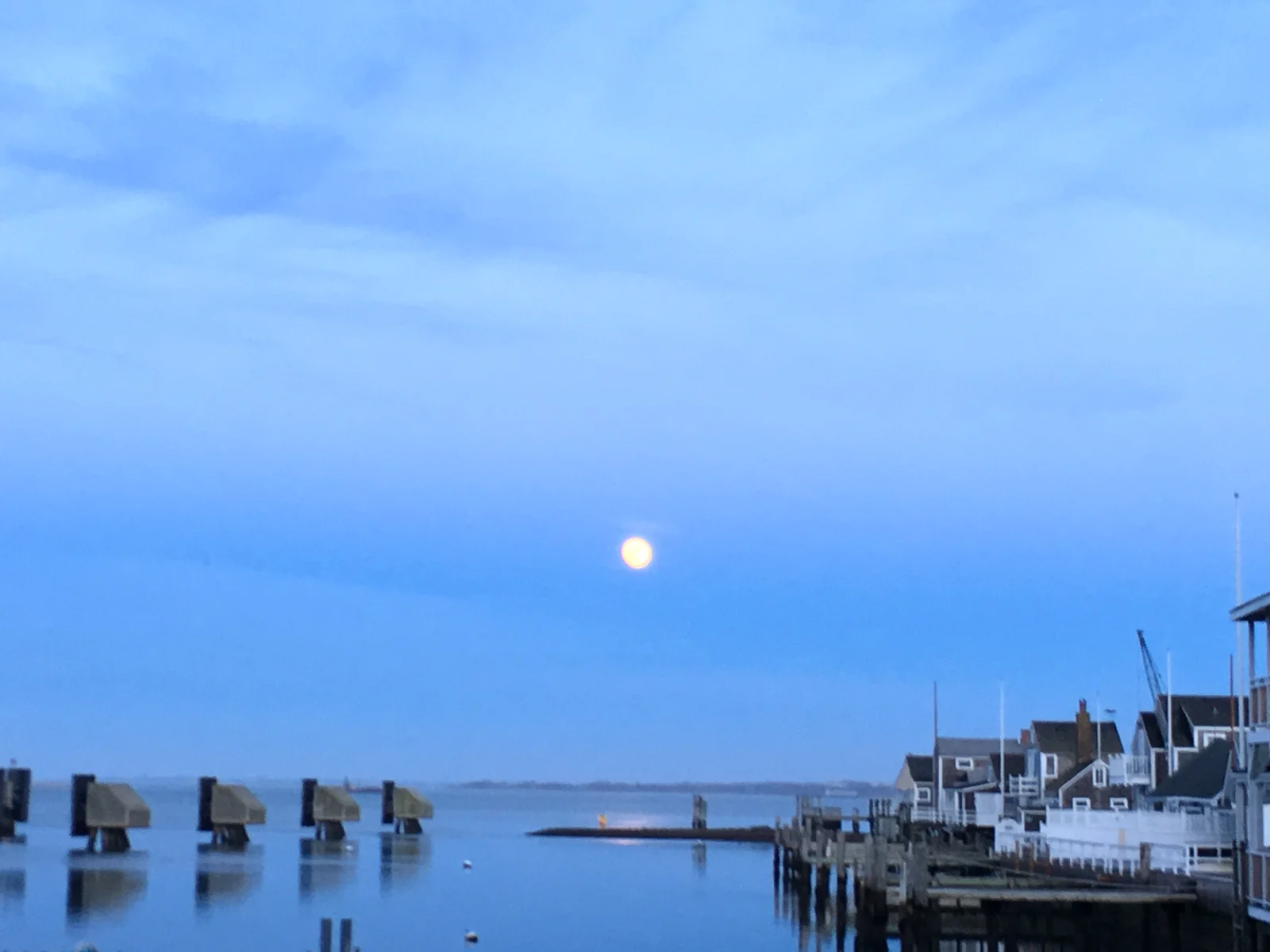
The clocks fell back this weekend, and the island’s evenings get quieter before they get cold.
Early Sunday morning, clocks on Nantucket fell back the same hour they do everywhere else. But where the time change is mostly an inconvenience on the mainland — an extra hour of sleep, a dashboard clock to reset — out here it marks something the island actually feels: the evening arrives while the ferry’s still running, and Main Street’s lamps come on before most people have left work.
What the island does once the light actually changes
By the second week of November, sunset lands before five. The harbor goes from gold to gray in about twenty minutes flat, and the porch lights that stayed off all September start earning their keep again. Fog holds longer into the morning, woodsmoke starts showing up in the air over Mid Island, and the moors turn the color of weak tea almost overnight. None of it happens gradually the way it seems to on the mainland. Out here, between the solstice creeping closer and the hour you just lost, the whole island’s light seems to shift over a single weekend.
What the island makes of the dark instead of fighting it
I’ve watched Nantucket handle this shift the same way it handles most things it can’t change: it makes something out of it instead of complaining about it. October gave the island its leaving rituals — the aquarium exhibit packed up, the last cast of the season off the beach. November gives it something quieter but just as deliberate. The Artists Association’s “Short Days, Long Nights” show — paintings, photography, and sculpture from more than two hundred local artists, up at the Seward Johnson Gallery on Federal Street through November 17 — isn’t subtle about its premise. The show exists because the light changed, and someone decided that was worth looking at rather than waiting out.
That’s the island’s actual relationship with its own dark months: not endurance, exactly — attention. People here notice the way headlights carry further on an unlit road once the trees are bare, how a kitchen window lit up at 4:45 p.m. reads as an invitation rather than an alarm, how a Sunday afternoon that used to end at six now quietly ends at four. You start planning errands around the light instead of the clock, the same way you’d plan them around the tide.
Why this is the week a house tells you something new
Most buyers see Nantucket in July, when every room is bright and the question of where the light falls never comes up. It comes up now. A house that faces south or west holds onto its afternoon light an hour or two past where a north-facing one goes flat — and in the stretch between the fall-back and the solstice, that difference is the whole character of a late afternoon at home. Ask anyone who’s lived through a few Nantucket Novembers which rooms they actually sit in once the light goes early, and they won’t describe square footage. They’ll describe which window, and what it looks out on at four in the afternoon.
If you’re touring a property this month, don’t just picture how this house looks right now, in the clear light of a Saturday showing. Picture a Tuesday in January, sunset at 4:20, the kids doing homework at the kitchen table under a single overhead light, and ask whether the rooms you’d actually live in still feel like somewhere you want to be. It’s a different test than the one most buyers run, and it’s the one that actually predicts whether you’ll be happy here in February, not just in August.
It’s a test worth running even if you already own here. A room that works perfectly as a summer sunporch can sit unused all winter if nobody thought about where the light would be standing in December. I’ve had owners re-furnish a single room — move the reading chair six feet, add a lamp where the overhead used to be enough — once they actually lived through a dark month in a house they’d only ever furnished for July.
What this means for the months ahead
None of this is a case against winter here — the opposite. The island doesn’t get smaller when the light does; it gets more specific about what it’s showing you. The dark takes the crowds first and leaves the parts that were always the actual point: a lit window, a street you can hear your own footsteps on, a harbor that goes still enough to notice the tide moving through it.
If you’re weighing a property through this season, I’d rather walk it with you at 4:30 in the afternoon than at noon — it’s the more honest tour. Get in touch and we’ll pick the hour that tells you the truth about it.