Is your land worth more than your Nantucket house?
Owners of long-held island houses often ask the question sideways: "Would someone just tear it down?" It's a fair thing to wonder, and the honest answer is that it depends less on the house than on the lot: its zoning district, how much of it can be covered, whether it can hold a second dwelling, and what stands in the way of taking anything down. Knowing the answer before you list changes how you price, who you market to and what you bother to fix.
On Nantucket, the land sets the floor
There is almost no vacant land left to buy. Over the last three years, 127 parcels of land sold through LINK across the whole island, at a median of $1,925,000 for a median lot of about 20,000 square feet. In the same period 778 single-family houses sold. When land is that scarce, a house that a buyer doesn't want is still the way to get a lot they do, and the value of the lot becomes the floor under the price.
What the sales show: vacant land beside the least expensive houses
One way to see the floor is to set vacant land sales beside the least expensive house sales in the same area. If the two sit close together, buyers at that level are paying mostly for the ground.
| Area | Land sales | Median land sale | Median lot | House sales | A quarter of houses sold at or below | Median lot for those houses |
|---|---|---|---|---|---|---|
| West of Town | 8 | $2.84M | 22,400 sq ft | 28 | $3.24M | 21,800 sq ft |
| Surfside | 7 | $2.80M | 30,000 sq ft | 55 | $3.15M | 34,400 sq ft |
| Mid Island | 51 | $1.40M | 11,300 sq ft | 58 | $1.65M | 9,100 sq ft |
LINK Nantucket MLS, land and single-family sales, September 2023 to September 2026. Small samples outside Mid Island; read these as rough guides.
In West of Town and Surfside, where the lot sizes line up, the least expensive quarter of houses sold for no more than roughly 12 to 14 percent above what comparable vacant land brought. In Mid Island the gap is about 18 percent, on slightly smaller lots. At the bottom of each of those markets, the house is adding little. The buyer is paying for the ground.
That doesn't mean those houses were torn down. Some were renovated, some were rented, some are sitting while plans are drawn. It means that was what the market would pay for them.
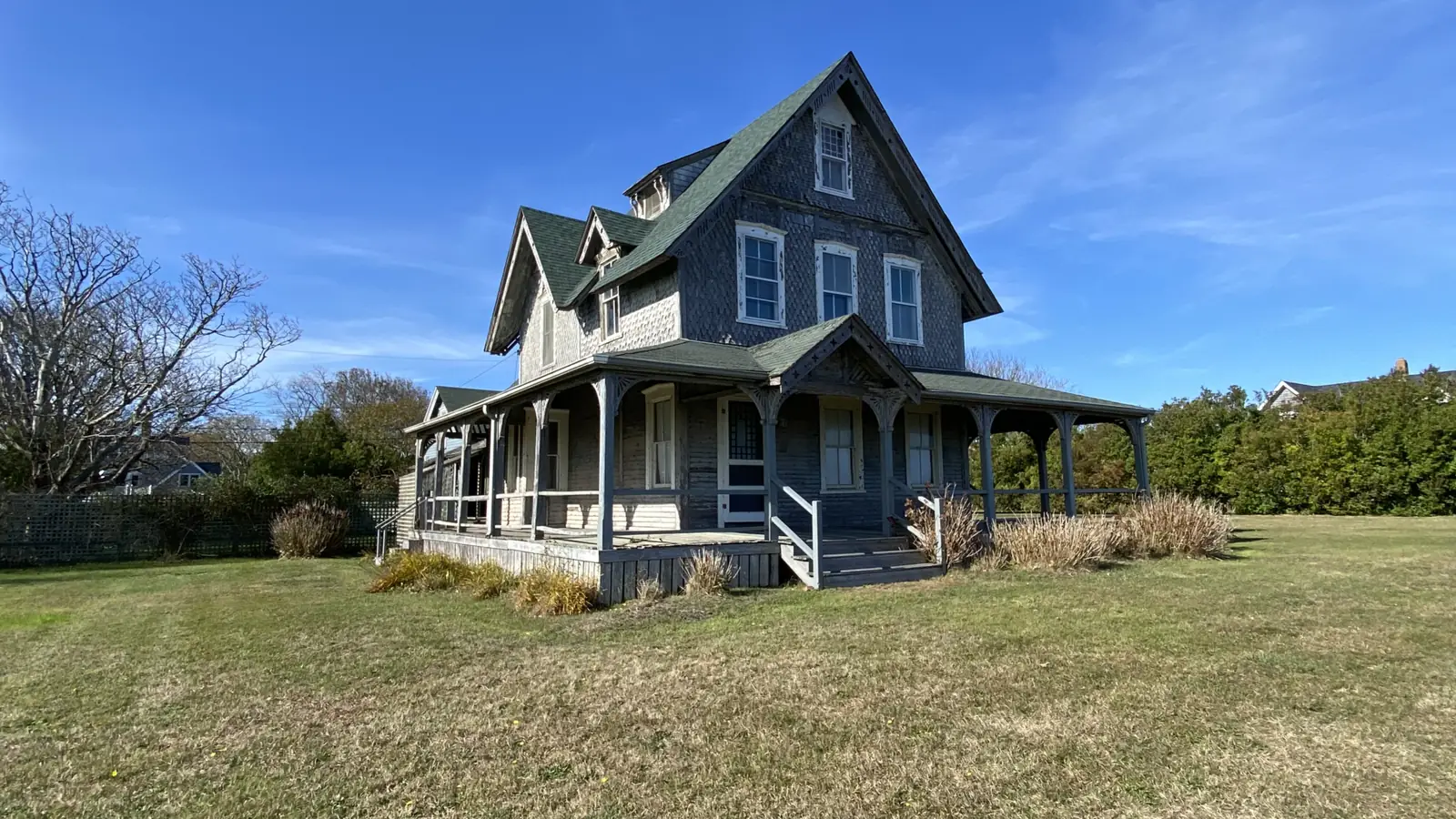
What makes a lot worth more
- The zoning district and its ground cover limit. The share of a lot that buildings may cover runs from 40 percent in parts of town to 4 percent or less in the outlying districts. A 5,000 square foot lot in the R-5 district can carry 2,000 square feet of footprint. An 80,000 square foot lot in LUG-2 can carry 3,200. The zoning guide has the full table.
- Whether it can hold a second dwelling. On many lots it can, and buyers pay for that.
- Sewer or septic. Town sewer removes a constraint. On septic, the system's permitted bedroom count caps what a buyer can build without a new system.
- Shape, access and setbacks. A wide, regular lot on a town road builds more easily than a narrow one on a shared way.
- What's around it. Conservation land next door, a view, the walk to town or the beach.
- Flood zone and erosion. Both narrow what can be built and what it costs to insure.
When the house is worth more standing
Here is the part owners miss. A large share of the island's houses went up before the current zoning, and many cover more of their lot, or sit closer to the line, than the rules now allow. Those houses are lawful. Under state law and the town's bylaw, a structure that has stood for ten years without a recorded enforcement action is protected, and it can generally be altered so long as the existing violation isn't made worse.
Take that house down, and the new one has to meet today's limits unless a special permit is in hand before the demolition. So a house that covers more ground than the lot would now be allowed can be worth more standing, to a buyer who renovates it, than the cleared lot would be to a builder. If your house is larger than its neighbors' new construction, find this out before you describe it as a teardown.
A house can also be worth more standing simply because it's good: sound, well sited, and already carrying the approvals and the character that a new house would have to earn from the historic commission.
Taking a house down isn't a given
Every structure on the island sits inside the historic district, and none comes down without the Historic District Commission's approval. The commission can refuse demolition of a historically significant building outright. A builder pricing your lot will discount for that risk, or make an offer conditional on the approval. If the house is old enough to raise the question, an early conversation with the commission's staff is worth more than a guess.
Erosion: when the land itself is the risk
Lot value assumes the lot will be there. On the stretches of shoreline that are losing ground, it works the other way: the land is what's at risk, and prices show it. On Sheep Pond Road in Madaket, LINK records a house first offered at $2,295,000 that sold for $600,000 in early 2024, and another listed at $850,000 that sold for $400,000 in 2025. Those are the extremes, and they are specific to a few stretches of coast. The coastal erosion guide covers where and how fast.
How to sell a house whose value is in the land
- Get a current survey, with the house, the lot lines, the setbacks and any wetlands shown.
- Have the zoning worked out on paper: the district, the ground cover allowed, what exists now, and whether a second dwelling fits.
- Know your septic permit or sewer status.
- Market to both buyers. The family that wants a project and the builder who wants the lot read different things in the same listing. Describe the house honestly and the land precisely.
- Don't renovate for a buyer who may not keep the house. Clean it, clear it, and let the lot speak.
- Expect conditions. Buyers planning to build often ask for time to confirm what they can do. A clean file shortens that.