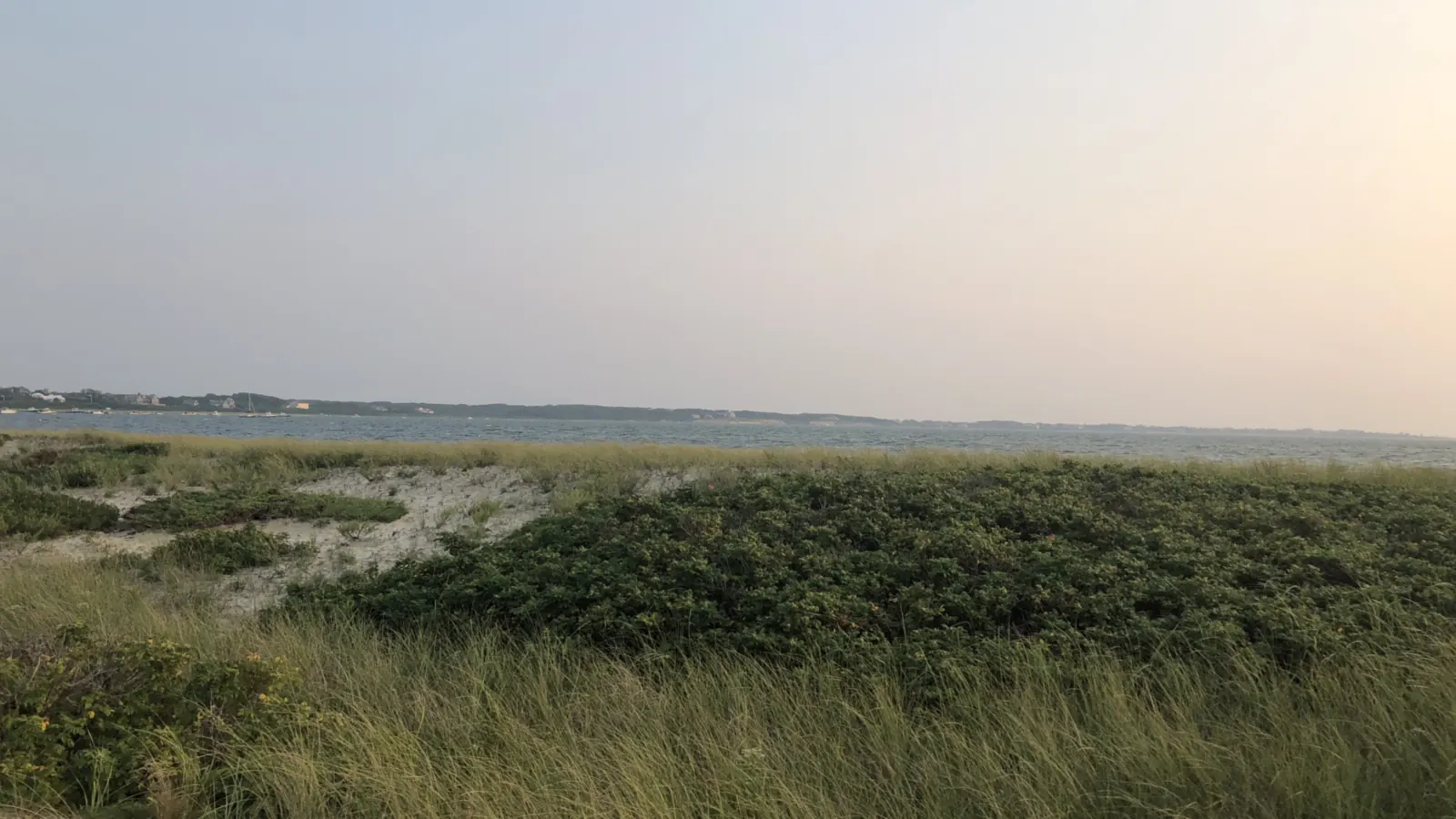
On a neck of land where the harbor and the open Atlantic sit minutes apart in either direction, Wauwinet has never had room to grow, and that’s exactly the point for the handful of owners who get to call it home.
A neighborhood with conservation land for a neighbor
Wauwinet sits on the northeast corner of Nantucket, on a narrow neck where the harbor meets the open ocean, roughly a 21-minute drive from town. Its northern border isn’t another subdivision; it’s the Coskata-Coatue wildlife refuge, permanently protected conservation land. That border is the whole story of this neighborhood: it can’t be subdivided outward and it can’t be filled in, so the supply of houses here is about as fixed as real estate supply gets anywhere on the island.
Harbor on one side, surf on the other
Most Nantucket neighborhoods pick a shoreline, the harbor or the Atlantic, and build their identity around it. Wauwinet doesn’t have to choose: many of its properties sit close enough to walk to a harbor beach in one direction and ocean surf in the other, each about ten minutes on foot. It’s also the last stop before Great Point: a gatehouse here controls the permitted, four-wheel-drive, oversand access into the wildlife refuge, which makes Wauwinet the literal gateway to one of the last truly undeveloped stretches of beach on the East Coast.
An inn older than most of the neighborhood’s houses
The neighborhood takes its name from a Wampanoag chief, and its best-known address, The Wauwinet, has been welcoming guests since 1875. The inn and its restaurant, Topper’s, are still open today, more than a century and a half later, and they’re effectively the entire commercial footprint of the neighborhood. There’s no corner store, no row of shops. If you live in Wauwinet, the inn’s porch is as close as it gets to a town square.
What scarcity actually means for a buyer here
Because the land to the north is permanently conserved and the neck itself is narrow, there is no real path to more houses getting built here, which is the opposite of how most real estate markets work. Listings can go years apart, and when one does surface, it doesn’t behave like the rest of the island’s market: comparables are thin, so pricing leans more on relationships and patience than on a stack of recent closed sales. Practical life here runs on septic and well systems rather than town water and sewer, and Polpis Road, the only way in, gets busy in August. None of that is a drawback to the buyers who end up here; it’s the filter that keeps the neighborhood exactly as small as it’s always been.
A neighborhood that runs on a different clock
Wauwinet isn’t a year-round street in the way a Nantucket Town block is. Many of its houses were built as, and still function as, warm-weather places: close to the water and the inn, but a real commitment to winterize and staff through a Nantucket January. Polpis Road itself thins out considerably once the inn’s season winds down, and owners plan around that rhythm rather than fighting it: plowing, pipes, and a caretaker who checks on the place matter more here than almost anywhere else on the island. It’s a trade worth naming honestly, because the same isolation that makes August here feel private makes February here feel genuinely remote.
Why people choose it anyway
The owners who land in Wauwinet aren’t optimizing for convenience. They’re choosing distance from everyone else’s Nantucket: two different coastlines within a ten-minute walk of each other, a wildlife refuge for a backyard, and a 150-year-old inn standing in for the entire downtown. There’s a version of Nantucket life where you want to be able to walk to the Dreamland and three restaurants before dinner, and there’s a version where the whole point is that you can’t. Wauwinet is built for the second kind of owner, and it rewards them precisely because almost nobody else is trying to get in.
I tell buyers who ask about Wauwinet the same thing every time: don’t go looking for an active listing here. Go looking for a relationship with someone who already knows when one’s about to exist. In a neighborhood this small, by the time a house is publicly for sale, the easiest conversations about it already happened months before.