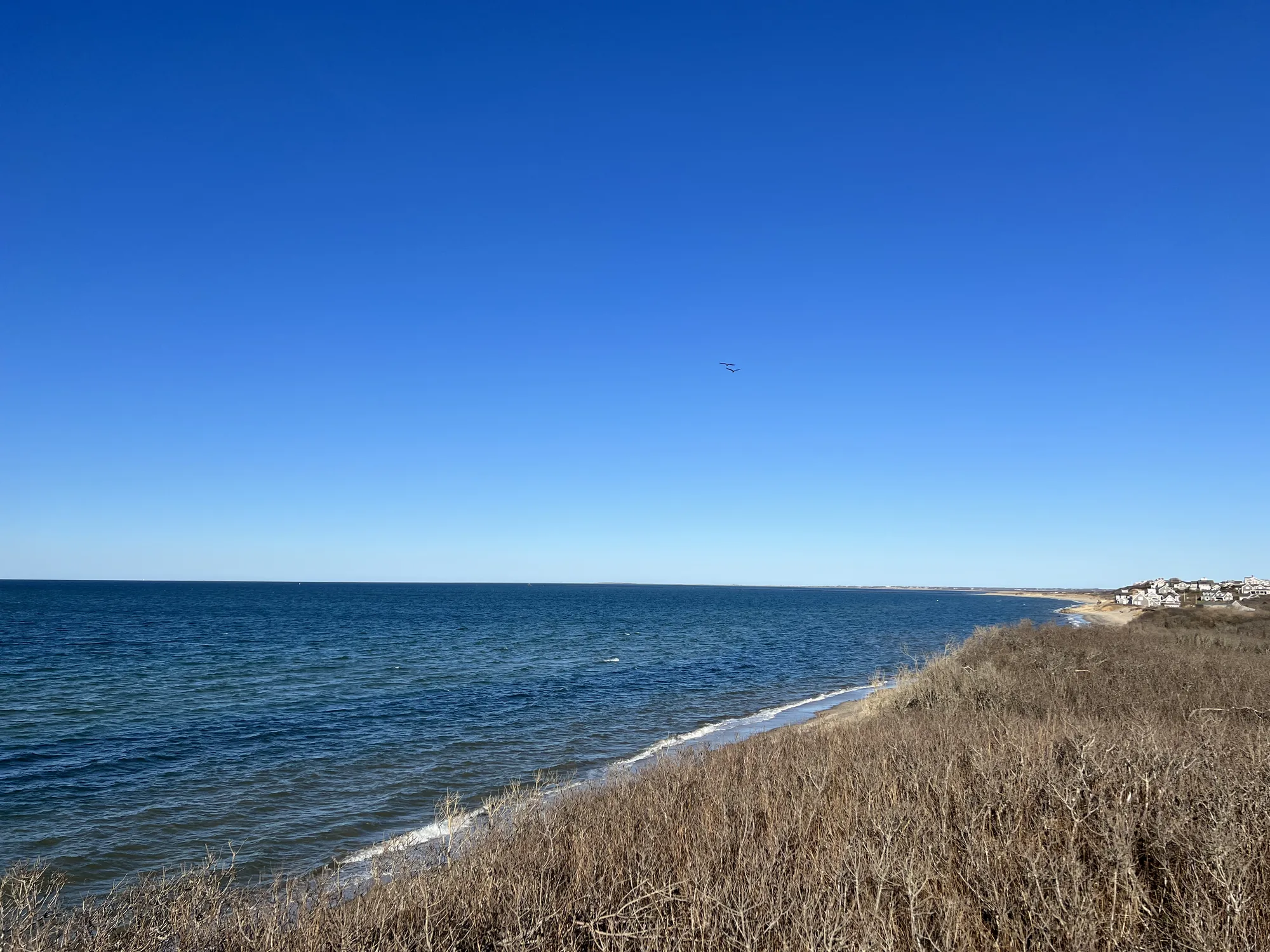
Between the Cliff and Madaket, a lattice of sandy lanes runs down to the warmest, gentlest swimming on the island. Dionis is small, quiet, and held tighter than almost anywhere on Nantucket. Here is what owning there actually feels like.
Where Dionis is, and why its water is different
Dionis sits on the north shore roughly midway between town and Madaket, off Eel Point Road and the Madaket Road, about eleven minutes from Main Street by car and a flat, easy ride on the bike path. The name goes back to Dionis Coffin, wife of Tristram, one of the island’s first English proprietors, and it has belonged to this beach for longer than most of the houses behind it.
What makes the neighborhood is a fact of geography that never changes. The north shore faces Nantucket Sound, not the open Atlantic. The prevailing summer wind comes out of the southwest, which means it blows offshore here, and on the afternoons when the south shore is closed for surf, Dionis is glass. The water is warmer, it stays shallow a long way out, and it is the beach islanders have sent their children to for generations. Behind it stand some of the highest primary dunes on the island, and the houses tucked into and behind them get a kind of privacy that a busier coast cannot offer.
The beach the island keeps for itself
Dionis Beach is a town beach with a lifeguard stand in season and a parking lot at the end of the road, but it rarely feels like a destination. The crowd is families with coolers and grandparents in low chairs, and the mood is set by the water, which does not demand anything of anyone. Up the road toward Eel Point the sand turns to the 40th Pole, where island trucks line up on summer evenings, and beyond it the land runs out into the Nantucket Conservation Foundation’s Eel Point holdings: protected dune, marsh, and the long view across to Madaket Harbor.
That edge matters to the neighborhood in a way that is easy to underrate. The open land toward Eel Point is not waiting for a subdivision. It is the permanent western border of Dionis, and it is one of the reasons the lanes here still feel like lanes.
What you are actually buying
The housing stock is small, residential only, and it sorts almost entirely by distance to the dune line.
- The dune-line houses. The front tier: homes set into or just behind the primary dunes, some with their own path over to the beach. Sound views, sunset light, and the calm-water premium, with dune-protection setbacks as the defining constraint on what you can add.
- The lanes behind. Off Eel Point Road, sandy lanes hold classic summer houses and newer builds on generous lots. A short walk to the beach without the front-line premium, and the neighborhood’s realistic entry point.
- The Madaket Road edge. Toward the paved road, properties trade dune proximity for convenience: easier winter access, the bike path at the end of the drive, and a ten-minute walk to a swim.
How the market here actually behaves
Dionis is a tightly held market, and the record shows it. Through September 30, LINK Nantucket has exactly one Dionis home sale on the books for 2026, at $5,550,000, and it closed in February after a listing that first appeared in LINK in 2023. That is not a market statistic. One trade is one trade. It is a reminder that families who buy here stay, that the beach is the reason, and that the beach does not age out.
For context, the neighboring district the Cliff recorded nine home sales in the same months at a $5,600,000 median, and the island-wide median home sale year to date is $3,700,000. Dionis prices sit in that north-shore company, with the usual steep gradient back from the water: calm-water access and a Sound view set the premium tier, and a few hundred yards inland is a different conversation. Published medians say very little here. The honest comp set is the last handful of trades on the north shore, adjusted hard for beach proximity, and knowing which families might be ready to sell is worth more than any listing alert.
The diligence that matters in Dionis
- Dune and wetland setbacks. The dunes are protected, and building near them is regulated parcel by parcel. Any plan to expand, add a pool, or rebuild needs to be checked against the conservation buffers before you fall in love with the drawings.
- Sandy-lane access. Several lanes are unpaved. Charming in July; worth asking about plowing, deliveries, and what maintenance arrangement exists among the neighbors.
- Water and septic. This far from town, confirm how the house gets its water and what the septic system is rated for. It shapes bedroom count, rental capacity, and renovation scope.
- Rental character. Families book Dionis for the swimming and come back every year. Multi-bedroom homes near a beach path perform reliably, and the calm water is the whole pitch.
How I would shop it
Walk the beach path before you walk the house. The difference between two minutes through firm sand and ten through soft sand is the difference between daily swims and occasional ones, and the market prices that gap precisely. Then verify the environmental layer, because it decides what the lot can hold.
If you are choosing between the north and south shores, spend one windy July afternoon at Dionis. The day the south shore closes for surf, this water is flat. Either that matters to your family or it does not, and once you know, the rest of the search gets simpler.