Waterfront on Nantucket: three different waters, three different lives
One word, doing a lot of work
"Waterfront" is doing a lot of work in that word. On Nantucket it can mean a harborfront lawn in Monomoy where the water is a rumor of masts and morning light; an oceanfront perch in Sconset with the Atlantic working below; or a pondfront hideout on Hummock Pond where the loudest thing all day is a kayak paddle. They're different purchases, different stewardships, and — candidly — different risk profiles.
This page is the honest map.
The three waters
Harborfront. The inner coast — Monomoy, Shimmo, Pocomo, Brant Point's Hulbert Avenue, and Wauwinet, which threads between harbor and ocean — fronts protected water. Calm anchorage, town views across the harbor, swimmable beach at the foot of the lawn, shellfishing in the fall. This is the island's most defended waterfront, in both senses: sheltered from the open Atlantic, and priced accordingly. The island's record sales live here and on the Cliff's harbor-facing edge — $42 million on Monomoy Road in 2023, $37.75 million on Sherburne Way in 2025.
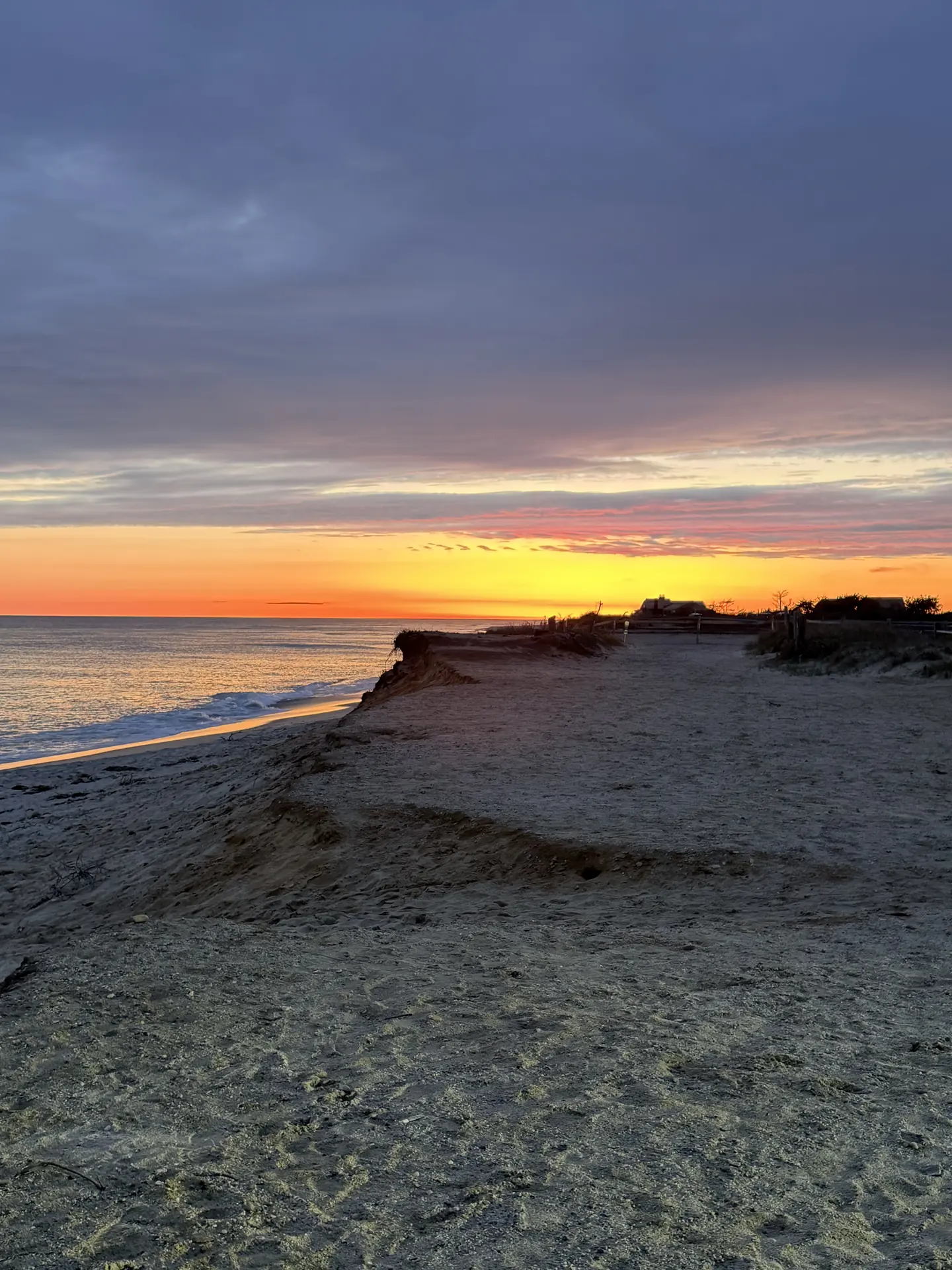
Oceanfront. The south and east shores — Surfside, Cisco, Madaket, Tom Nevers, and the Sconset bluff — face the open Atlantic. This is the cinematic waterfront: surf, dunes, hundred-mile horizon. It is also the working edge of the island, where erosion is not an abstraction (more below). The north shore — Dionis, out toward Eel Point — offers a middle temperament: Nantucket Sound's calmer water with true beachfront.
Pondfront. The quiet third option almost nobody off-island thinks to ask about: Hummock Pond at Cisco, Miacomet Pond, Sesachacha at Quidnet. Water views and water access with a buffer from the open coast, often at a meaningful discount to ocean frontage — and frequently backed by conservation land that will never change.
What the market looks like
| Sale | Water | Price |
|---|---|---|
| Monomoy Road — all-time island record (2023) | Harborfront | $42,000,000 |
| Sherburne Way — top 2025 print | Harbor-facing Cliff | $37,750,000 |
| Sachem Way (2025) | Waterfront | $31,000,000 |
| Pocomo Road (2025) | Harborfront | $26,500,000 |
Those prints sit atop a market that did roughly $1.8 billion across 417 sales in 2025, with a $3.5 million median. Sales above $5 million made up about a third of single-family transactions — and more than 60% of the dollar volume. For the top of that ladder, see the luxury market; for the current numbers island-wide, the mid-2026 market report.
Two practical truths follow. First, true waterfront is structurally scarce: the buildable shoreline was largely spoken for decades ago, and conservation holdings keep much of the rest off the board permanently. Second, a real share of waterfront trades quietly — estate sales, neighbor-to-neighbor, off-market approaches — which is why watching the public listings alone understates what actually moves. The estates-and-compounds guide covers how that quiet layer works.
The erosion conversation, had honestly
You cannot write a truthful page about Nantucket waterfront without this section, so here it is plainly.
The island is made of sand, and the Atlantic defines it. The Sconset bluff has averaged around three feet of loss a year, with far worse in a bad storm winter. The geotube project protecting the bluff's base suffered major failures in early 2026, and that May, Town Meeting voted down its proposed 3,000-foot expansion, 182–163 — the protective strategy there is genuinely unsettled as of this writing. In Madaket, the Sheep Pond Road stretch has run seven to ten feet a year, and homes there have been moved, sold at land-value discounts, or demolished. The town's Coastal Resilience Plan projects $3.4 billion in cumulative structure losses by 2070 if nothing is done — which is precisely why a great deal is being done, from a $930 million project roadmap down to elevation guidelines for historic buildings.
What this means for a buyer is not "don't buy waterfront." It means waterfront here is bought parcel by parcel, not postcard by postcard. Harborfront and Sound-side frontage face materially different dynamics than the open south shore. Two oceanfront lots a mile apart can have entirely different setback histories. Due diligence on any coastal parcel should include the erosion history, the flood zone, the insurance picture, and the conservation buffers — and we walk every waterfront client through all four before an offer goes in. For the shoreline itself — where it moves, how fast, and how to read a parcel's record — the coastal-erosion guide goes deeper.
Rules of the shore: what you can and can't do
Where to look, by temperament
See what's on the water right now
Waterfront on Nantucket — frequently asked questions
What does waterfront cost here?
In 2025 the island's highest sales — $37.75 million, $31 million, $26.5 million — were all waterfront or water-view, and the all-time record is $42 million on Monomoy's harborfront. Entry points vary enormously by water type: pondfront and Sound-side frontage can trade for a fraction of trophy harbor or bluff positions. There is no useful single number; there is a useful conversation.Can I build a dock?
Almost certainly not — new private docks are prohibited in Nantucket and Madaket Harbors, and state Chapter 91 licensing governs anything in tidelands. Harborfront ownership typically comes with mooring rights instead. The few grandfathered docks command extraordinary premiums.Is erosion a reason not to buy oceanfront?
It's a reason to buy carefully, not a reason not to buy. Exposure varies street by street — harborfront and Sound-side parcels face different dynamics than the open south shore, and even along the bluff, setback and history differ lot to lot. Insist on the parcel's erosion record, flood zone, and insurance picture before you offer.Do I need flood insurance?
If the home sits in a FEMA high-hazard flood zone and carries a federally backed mortgage, yes. Even where it isn't required, most coastal owners carry it — standard homeowners policies exclude flood. Wind deductibles of 1–5% are also the island norm. Get the insurance quote during diligence, not after.Can I renovate or expand a waterfront home?
Usually, within limits: Conservation Commission wetland buffers govern how close to the water you can work, the HDC reviews the exterior, and a pool in a coastal flood zone has to be designed so it cannot interact with flood waters. The right sequence is plans → regulatory read → budget — in that order.Does waterfront ever come up off-market?
Regularly. Long-held family properties often change hands without a listing. If you have a specific stretch of shore in mind, say so — quiet inquiry is half of how this segment works.Waterfront moves quietly here
Sean Kalman is a sixth-generation Nantucketer, a Nantucket REALTOR®, and the founder of The Kalman Co., brokered by eXp Realty. He'll tell you which shore fits the life you're picturing — and what the water is doing to that shore. Reach him at sean@thekalmanco.com or 508-228-4578. Equal Housing Opportunity.