Wauwinet vs. Polpis: one road east, two ideas of quiet
The same road, two destinations
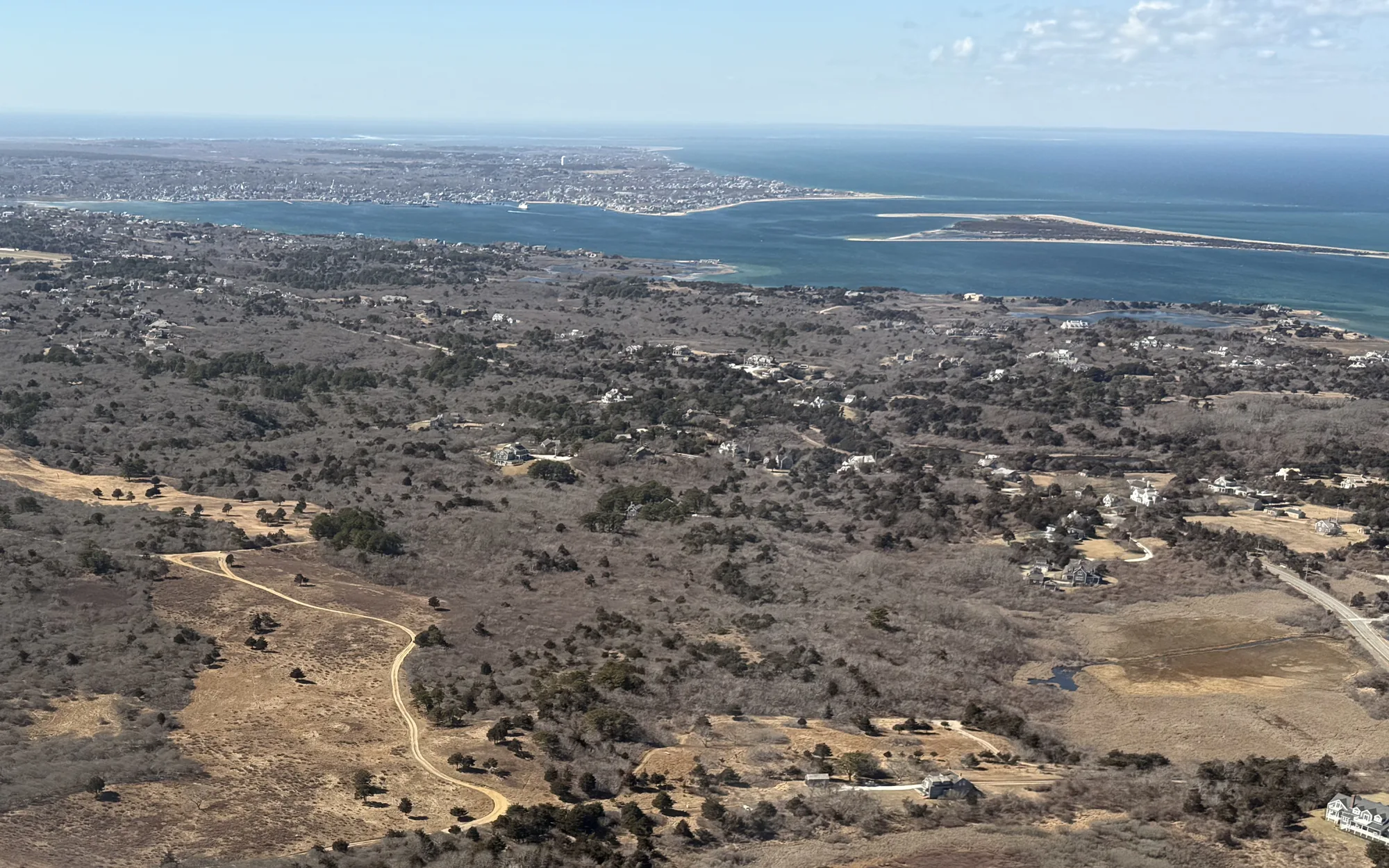
Head east out of town on Polpis Road and the island changes register: the moors open up, split-rail fences run along cranberry bog, and the harbor starts appearing between the trees on your left. About ten minutes out, you're in Polpis. Keep going — past Quidnet, out the narrowing neck where harbor and ocean close to within a few hundred yards of each other — and the road ends at Wauwinet, at the gatehouse to Great Point.
Buyers weighing one are usually weighing the other, because on paper they promise the same things: harbor water, conservation land at the property line, estate scale, and real distance from August. The difference is degree — and degree, out here, is everything. Polpis is space with town still in your pocket. Wauwinet is the end of the road, and means it. (Weighing Polpis against the island's other quiet middle instead? That's Polpis vs. Tom Nevers.)
The one-line versions
The waters
Polpis fronts Polpis Harbor — protected, calm, and intimate, the kind of water a family actually uses daily: kayaks off the beach, a small boat on a mooring, kids in flat water. The crown-jewel parcels sit directly on it, and the handful of private docks there are legacy structures — new private docks are prohibited in Nantucket's harbors by bylaw, which is exactly why existing dock rights trade like the treasures they are. Quidnet and Sesachacha beaches are minutes away for the ocean side of the day.
Wauwinet fronts the head of Nantucket Harbor — with the Atlantic a short walk in the other direction. That two-shoreline life, calm harbor beach one way and ocean surf the other, exists almost nowhere else on the East Coast, and it is the neighborhood's defining trick. Boating runs up-harbor; the inn's launch crosses in season; and beyond the gatehouse, Great Point's wild beaches and some of the Northeast's best surfcasting are effectively the backyard, by permitted oversand vehicle.
The honest sorting: Polpis water is for using; Wauwinet water is for living between. Ocean-side Wauwinet properties toward Squam also carry the erosion awareness that comes standard on the island's east-facing coast — the waterfront guide covers that conversation honestly.
The land, and what surrounds it
Polpis is defined by room. Lots commonly run one to three-plus acres, and large tracts of Nantucket Conservation Foundation land border much of the area — permanently protected, never to be built on — which keeps sightlines long and density low. Polpis also still holds some of the last sizable buildable land on Nantucket, which makes it the rare luxury district where designing from scratch is a real option rather than a thought experiment.
Wauwinet is defined by edge. Conservation land and the Coskata-Coatue wilderness seal the neck at the north, which means the housing stock is finite in a way zoning can't change — the neighborhood cannot meaningfully grow. There's no meaningful build-your-own pipeline here; there's a small, sorted stock — harborside homes, ocean-side dune houses, and the up-neck properties near the gatehouse — and years can pass between listings in some stretches.
Practically, that shapes how you buy. In Polpis, the diligence is about the parcel: septic capacity under Title 5 — there's no town sewer out here, and harbor-watershed parcels can trigger nitrogen-reducing system requirements — plus conservation and wetland setbacks that can shrink a building envelope well below what the acreage suggests, and flood mapping on the low harborfront land. In Wauwinet, the diligence is about the wait: know precisely what you'd buy, and be ready when it appears, because the windows are measured in days.
The distance, honestly
Polpis is about ten to eleven minutes from town — close enough that a forgotten dinner reservation is recoverable, far enough that nobody wanders in. That balance is the district's entire pitch: space and privacy without giving up convenience, with 'Sconset roughly ten minutes the other way.
Wauwinet is about twenty minutes, more in August traffic on Polpis Road, and there is no pretending otherwise: the distance is the product. It trims the buyer pool to people who want exactly this, and rewards them with a quiet nothing closer to town can match. Topper's at The Wauwinet is effectively the neighborhood restaurant; everything else is a planned trip, which owners out here consider a feature. Winter is quiet in the fullest sense — some houses button up after Thanksgiving, and four-season use is a question to confirm about the specific house, not the neighborhood.
The question that decides it: is town something you dip into daily, or visit deliberately?
The money, honestly
Both districts sit comfortably inside Nantucket's luxury market, and neither has an entry-level tier — Polpis and Wauwinet are destinations, not starting points. Beyond that, be honest about what the data can and can't say: LINK's quarterly neighborhood reports don't break either area out separately, and sale counts out east are small enough that any single quarter's figures describe which properties happened to trade, not the districts themselves.
What holds structurally: in both, you're paying for water access, acreage or remove, and scarcity that conservation land protects permanently. Harborfront with legacy dock rights anchors the top of the Polpis market; the two-water geography and fixed stock anchor Wauwinet's. Turnover in both is generational — properties are bought, held for decades, and passed down — which is why patience, and an agent who hears about things early, matter more here than timing. Ask for the current, parcel-level read: start with what's live.
Rentals and the long hold
Neither district is an income play first, and both reward the owner who knows it. Polpis books strong high-season demand — families who want acreage, calm water, and the ten-minute run to town rent it loyally, summer after summer. Wauwinet rents selectively: the remove that owners prize trims the pool to renters seeking exactly that, and while those bookings command strong rates at the inn's end of the market, most owners out here simply hold. In both, the real return has historically been the asset itself — scarcity that conservation land protects, turnover measured in generations, and a character that is unlikely to change because the land around it legally can't. The rental-income guide covers the math for owners who do rent.
Which one is you?
Wauwinet vs. Polpis — frequently asked questions
Which is closer to town, Wauwinet or Polpis?
Polpis — about ten to eleven minutes along Polpis Road, with 'Sconset roughly ten minutes further east. Wauwinet is about twenty minutes out, at the literal end of the road. Polpis buyers treat town as a daily option; Wauwinet buyers treat the distance as the point of the purchase.Can you have a private dock in Polpis or Wauwinet?
New private docks are prohibited in Nantucket's harbors by local bylaw. Polpis Harbor's handful of existing docks are legacy structures, and parcels carrying those rights trade at a real premium and rarely reach the open market. Elsewhere, harborfront owners typically hold mooring rights instead — ask hard questions if a listing implies dock potential.Which has better beach access?
Different offers. Wauwinet can genuinely walk to two waters — calm harbor beach one way, Atlantic surf the other — with Great Point's wild beaches beyond the gatehouse by permit. Polpis uses Quidnet and Sesachacha minutes away, plus its own calm harbor. Wauwinet wins on drama; Polpis on everyday usability.Is there buildable land in either neighborhood?
Polpis, yes — it holds some of the last sizable buildable acreage on Nantucket, with septic capacity, wetland setbacks, and HDC feasibility as the diligence that sizes what a lot really supports. Wauwinet, effectively no: conservation borders fix the housing stock, so buying there means waiting for an existing home.Do Wauwinet and Polpis homes rent well?
Selectively, and differently. Polpis books strong high-season demand from families who want acreage and calm water. Wauwinet's remove trims the rental pool to people seeking exactly that — bookings are fewer but command strong rates. Most owners in both hold rather than rent; the value lives in the asset.What should a buyer check before offering out east?
The parcel-level layer: septic capacity and Title 5 status — no town sewer runs out here, and harbor-watershed parcels can require nitrogen-reducing systems; wetland and conservation setbacks that shrink building envelopes; flood mapping on low harborfront land; and erosion history on ocean-facing Wauwinet parcels. All checkable before the offer, not after.Torn between the neck and the moors?
Sean Kalman is a REALTOR® and sixth-generation Nantucketer, and the founder of The Kalman Co., brokered by eXp Realty. Out east, hearing about a property early matters more than timing the market — and that is a relationship business. Reach him at sean@thekalmanco.com or 508-228-4578. Equal Housing Opportunity.