Living on Nantucket Island: A Sixth-Generation Native's Relocation Guide
The other forty-two weeks
Most people meet Nantucket in July, when the harbor is full and the ferries run heavy. That island is real, but it's only about ten weeks of the year. What I want to tell you about is the other forty-two — because if you're seriously thinking about living on Nantucket Island full-time, that off-season island is the one you'll actually be moving to. I'm a sixth-generation Nantucketer. I grew up here, went to school here, and I've watched the difference between visiting this place and living here play out for a lot of people. Some of them never leave. A few realize, honestly, that year-round island life isn't for them. This guide is meant to help you figure out which camp you're in before you sign anything.
I'll be straight with you throughout: the good, the logistics, and the parts that catch newcomers off guard. If you'd rather talk it through than read, tell me what you're weighing and I'll give you an honest read.
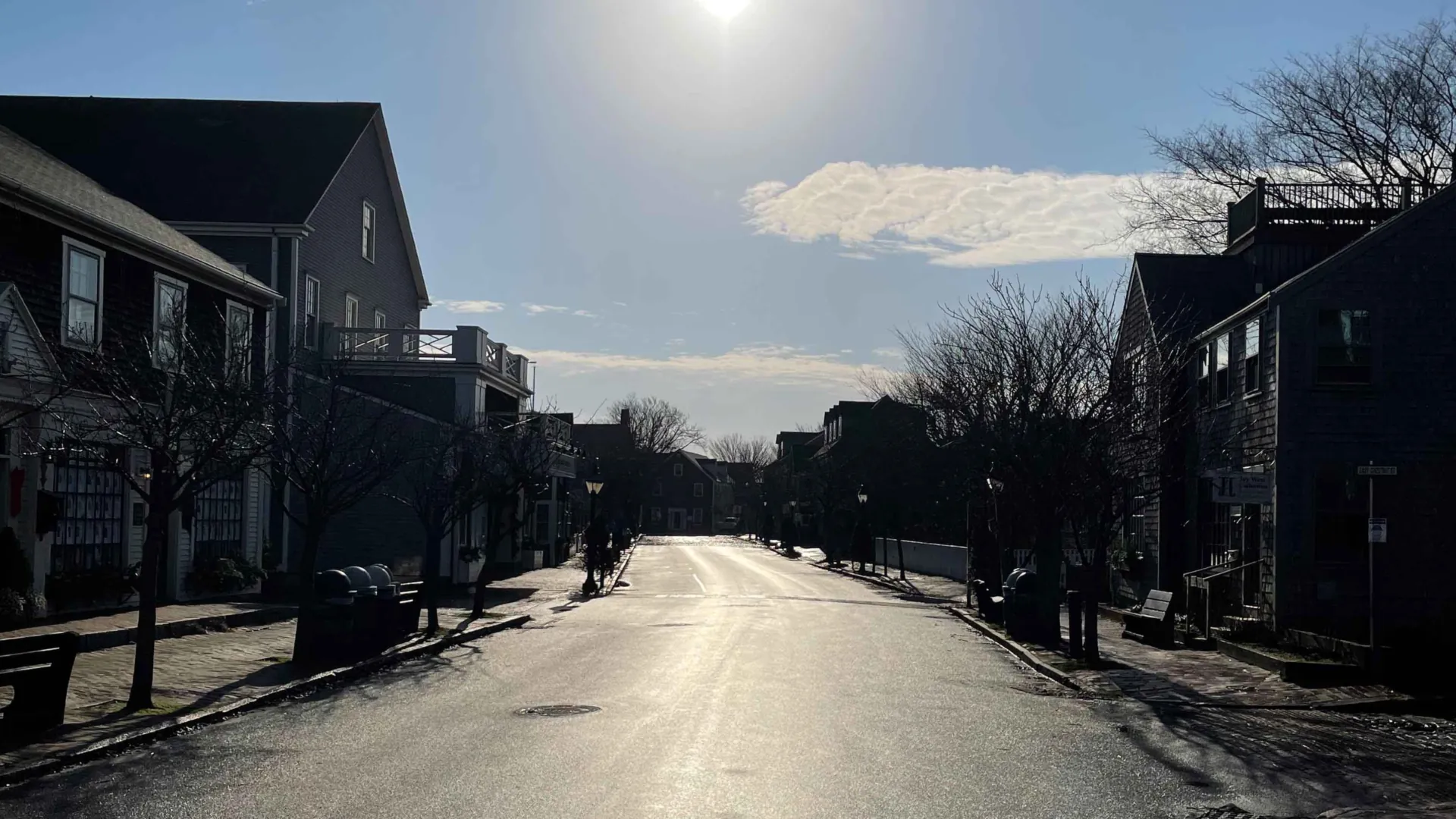
The year-round island behind the summer crowds
Nantucket's summer population swells to something like ten times its winter size. When the crowds thin out in September, what's left is a small, tight community — the people who plow the roads, teach the kids, run the restaurants that stay open, and show up when a neighbor needs a hand. It's a real town, not a resort with the lights off.
That has a texture you either love or you don't. In the off-season you know the person behind the counter at the market. You run into your kid's teacher at the post office. There's a genuine web of connection here that's rare on the mainland, and for a lot of transplants, that's the whole reason they stayed. The flip side: it's small. Privacy takes effort, everyone's business travels fast, and if you need a wide social circle and constant options, the quiet months can feel very quiet. I tell people the honest test isn't whether you love Nantucket in August — everyone does. It's whether a Tuesday in February still feels like home.
The seasonal rhythm shapes everything. Summer is intense — work is nonstop for anyone in a service or trade business, traffic backs up, and the island runs at full tilt. Then it exhales. Fall is, quietly, the best-kept secret: warm water, empty beaches, open restaurants, and the island back in the hands of the people who live here. Winter is slow and can be genuinely isolating if you're not ready for it, though the community pulls tighter to make up for it. Spring is mud and anticipation. Learn to love the shoulder seasons and you'll love it here.
What living on Nantucket Island is actually like day to day
Daily life here is smaller and more deliberate than mainland life, in ways that are mostly a feature. Your commute is measured in minutes, not highways. You bike to town. You plan around the weather and the boat schedule more than you'd expect. Groceries, hardware, and most essentials are here, but selection is limited and prices run higher because everything arrives by ferry — you learn to keep a deeper pantry and to order the rest online.
The Nantucket lifestyle people move here for is real: beaches you can have to yourself in the off-season, a walkable historic town, moors and conservation trails, sailing and fishing, and a slower pace that resets your nervous system. More than 40% of the island is permanently protected open space, so the natural landscape you fall for isn't going to get built over. What newcomers underestimate is the trade-off for that beauty — the logistics. Getting a contractor, a doctor's appointment, or a specific part can take longer here than anywhere you've lived. The people who thrive are the ones who trade convenience for quality of place on purpose, and don't fight the island's pace.
There's also a working island underneath the postcard. Fishing, building trades, hospitality, healthcare, education, town government — these are real year-round livelihoods, and the year-round economy is deeper than visitors realize. If you're moving here with a remote job or a business you can run from anywhere, you're in good company; the island's professional class has grown a lot as connectivity has improved.
Getting here, and getting around
The single biggest adjustment to island life is that you can't just drive off. Everything on and off Nantucket runs through the ferry or the airport, and you plan your life around both.
By boat. The Steamship Authority runs the traditional ferries from Hyannis — roughly a bit over two hours, and the only way to bring your own car across. Hy-Line runs a passenger fast ferry that's closer to an hour — fares and the car-reservation calendar are in getting to Nantucket. In summer you book car reservations on the Steamship well in advance; they go fast. Year-round residents learn the boat schedule the way mainlanders learn traffic patterns.
By air. Nantucket Memorial Airport is one of the busiest in New England in summer. Cape Air flies year-round to Hyannis, Boston, and beyond on small planes; in the warm months, seasonal jet service connects to New York, Boston, Washington and other cities. Flying is faster and weather-dependent — fog and wind cancel flights, and every islander has a story about being stuck on one side or the other.
Cars and getting around the island. Most year-round residents keep a car, but bringing one over costs money and reservations, and many households keep an older "island car" that lives here permanently. In-town, biking and walking are genuinely faster in season. The island has a seasonal shuttle (the NRTA "Wave") and a small set of taxis and rideshare-style services, but don't count on the mainland level of on-demand transport. My practical advice to anyone moving to Nantucket: plan for a reliable car you're willing to leave here year-round, and make peace with the ferry calendar early. How to get around the island without a car, district by district.
Schools and raising a family here
Nantucket is one public school district serving the whole island — elementary, intermediate/middle, and Nantucket High School all on one campus in town. It's a small, well-supported system where teachers know families and class sizes are modest. Because the district is compact, kids from every neighborhood grow up together, which is part of what makes the year-round community so tight. There are also independent options on-island for families who want an alternative, and the town invests heavily in its schools relative to its size.
Raising kids here is, in my experience, one of the best arguments for the move. Children have the run of a safe island — beaches, trails, sailing programs, sports, and a community that genuinely looks out for its own. The honest counterweight: options narrow as kids get older. Some families choose boarding school or the mainland for high school; specialized activities or advanced programs can mean travel. It's worth thinking a few years ahead about what your family will need, not just what works today.
Healthcare on a thirty-mile-out island
Nantucket Cottage Hospital, affiliated with Mass General Brigham, is the island's hospital — a full emergency department, primary care, and a growing set of visiting specialists. For everyday care, urgent needs, and stabilization, it's here and it's good. What you plan around is specialized and elective care: for certain specialists, procedures, or serious emergencies, patients are transferred or travel to Boston, often by medical flight. It's a system that works, but it asks you to be proactive — establish care early, keep your prescriptions ahead, and factor a Boston trip into anything complex. For most healthy households it's a non-issue; if you have ongoing medical needs, it's worth an honest look before you commit.

The real cost of living on Nantucket
There's no soft way to say it: Nantucket is expensive, and housing is the biggest reason. Through the end of August 2026, the median home sale price for the year stood at $3.65 million (LINK MLS, data through August 31, 2026). Rentals are scarce year-round and priced accordingly, and the winter/summer rental shuffle — where a year-round lease can turn into a summer-rate scramble — is a real feature of island life that catches newcomers off guard.
Beyond housing, plan for a general premium on daily costs. Groceries, fuel, building materials, and services run higher because they cross the water to get here. Contractors and trades are in high demand and book out well in advance, especially in season. On the other side of the ledger, Nantucket's property tax rate is low relative to mainland Massachusetts, and there's a residential exemption that meaningfully lowers the annual bill for qualifying owners who make the island their primary home — your closing attorney or the town assessor can give you exact current figures. And if you're buying, budget from day one for the Nantucket Land Bank fee: a 2% transfer fee on the purchase price, paid by the buyer at closing, that funds the conservation land keeping the island the island. On a $2 million home, that's $40,000 — a real line item, not a rounding error.
The market itself has more room in it than it did a few years ago, which matters if you're timing a move. At the end of August 2026 the island had 171 active listings across all property types, down from 211 a year earlier, and the 135 homes among them represented about seven months of supply at the current pace of sales — tighter than early summer, but still enough choice that a prepared buyer can negotiate rather than chase. For the current read, see the market report; if you already own here and are weighing a sale as part of your plans, a home valuation is the fastest way to a real number.
Weighing the Vineyard too?
The housing reality — where you'll actually live
Deciding to move is the easy part; finding the right place on a supply-constrained island is the work. Buying here is not buying on the mainland with a ferry attached — septic capacity (Title 5), Historic District Commission review, flood zones, and the true cost of ownership all shape what's a smart purchase. I've written the full playbook in the complete Nantucket buyer's guide; if you're relocating, read that next.
Where you land also depends a lot on neighborhood, and the island's are genuinely distinct — from walkable in-town living to the quiet of Tom Nevers or the sunsets of Madaket. The neighborhood guide breaks down each one for a year-round life, not just a summer week. When you're ready to see what's actually available, everything on the island's MLS is on the listings page, and you can get a feel for the off-season island itself through pieces like Nantucket in December and what's on around the island.
The single best thing you can do before relocating is spend real time here off-season — a week in November or February tells you more than a month of summers. And when you want a local sounding board, that's exactly what I'm here for.
Moving to Nantucket: how the move actually works
Once the decision is made, the move has an order of operations, and housing comes first. Year-round rentals are scarce, and many leases run only September to May before summer rates take over, so lock in the roof over your head before you set a date — a year-round lease, a purchase, or a purchase you'll live in while you plan the renovation. Arrive with a real pre-approval or proof of funds: on a supply-constrained island, the well-priced house goes to the buyer who is ready, not the one who is still deciding. The buyer's guide covers the purchase side step by step.
Getting your life across the water takes planning. The Steamship Authority is the only ferry that carries vehicles, and summer vehicle reservations are released months in advance and fill fast, so book the car and the moving truck early. Most mainland movers know the drill, and several island companies handle the last mile. Many year-round residents keep an "island car" that never leaves and ride the fast passenger ferries when they travel — the getting-here guide has the ferry and flight details.
A few things surprise newcomers. There is no residential mail delivery on Nantucket: everyone rents a post-office box, in Town or in 'Sconset, and uses a street address only for the parcel carriers. Electricity arrives from the mainland over National Grid's undersea cables, and there is no natural-gas service, so homes heat with propane, oil, or electricity — which shapes both running costs and what to look for in a house. Water is municipal from the Wannacomet Water Company in and around Town and from private wells across much of the rest of the island, and trash goes to the town's landfill and recycling center on Madaket Road, where sorting is mandatory and taken seriously. The cost-of-ownership guide walks through the running costs line by line.
Then the paperwork that follows every move, with island specifics: enroll the kids with Nantucket Public Schools, establish care at the hospital before you need it, and if the house will be your primary residence, apply to the assessor for the residential exemption once you qualify — it is a meaningful reduction, and the filing deadline matters. Give yourself the fall or the spring to land: the island is calmer, the trades have time for you, and by the time the first ferries fill in June you'll already feel like you live here.
Frequently asked questions
What is living on Nantucket Island really like year-round?
Small, close, and seasonal. In the off-season the island becomes a tight community of a few thousand year-round residents who genuinely rely on each other — the off-season guide shows that half of the year up close. It's quieter and more deliberate than mainland life — shorter commutes, a slower pace, and beautiful, near-empty beaches — but with real trade-offs in convenience, selection, and privacy. The honest test is whether you'd still love it on a quiet Tuesday in February, not just in August.How do you get to and from Nantucket?
By ferry or plane. The Steamship Authority runs traditional ferries from Hyannis (a bit over two hours, and the only way to bring a car), and Hy-Line runs a faster passenger ferry closer to an hour. Cape Air flies year-round, with seasonal jet service to major cities in summer. Weather — especially fog — can disrupt travel, so islanders build flexibility into their plans.Is it expensive to live on Nantucket?
Yes. Housing is the biggest factor — the median home sale price was $3.65 million for 2026 through August (LINK MLS), and year-round rentals are scarce. Everyday costs like groceries, fuel, and services also run higher because goods arrive by ferry. Offsetting that, the property tax rate is low relative to the mainland, with a residential exemption for qualifying primary-home owners.What are the schools like on Nantucket?
Nantucket is a single public school district serving the whole island from one campus in town — elementary through high school — with modest class sizes and strong community support. There are independent options as well — the schools and family-life guide covers all of it in depth. It's an excellent environment for younger children; some families weigh mainland or boarding options for high school as academic and activity needs specialize.How is healthcare on the island?
Nantucket Cottage Hospital, affiliated with Mass General Brigham, provides emergency care, primary care, and a rotating set of visiting specialists. For specialized procedures or serious emergencies, patients travel or are transferred to Boston, sometimes by medical flight. Establishing care early and staying ahead on prescriptions is smart island practice.Nantucket vs. Martha's Vineyard — which should I choose?
They're genuinely different islands, and it's too big a question to answer in a paragraph. We put the full side-by-side — prices, access, taxes, rental rules, and character — in a dedicated comparison.Can I work remotely from Nantucket?
Yes, and many do. Connectivity has improved substantially, and the island has a growing professional and remote-work population alongside its traditional trades, hospitality, healthcare, and town-government jobs. If your income travels with you, island life is very workable — just plan around the ferry and weather for travel.When is the best time to move to Nantucket?
Practically, many relocations land in fall or spring, when the island is calmer and it's easier to settle in, find services, and get a year-round rental or purchase closed before the summer crush. Whenever you move, spend real off-season time here first — a week in the shoulder season tells you far more about year-round life than any number of summers.Do I need a car on Nantucket?
Most year-round residents keep one, and many keep an older car that lives on-island permanently to avoid ferry costs. In-town, biking and walking are often faster in season. There's a seasonal shuttle and limited taxi/rideshare service, but not mainland-level on-demand transport, so plan for reliable personal transportation.What should I sort out first when moving to Nantucket?
Housing. Year-round rentals are scarce and often run only September to May, so secure a lease or a purchase before you commit to a move date. Then the car — the Steamship Authority is the only ferry that carries vehicles, and summer reservations fill months ahead — and the practical setup: a post-office box, utilities, and school enrollment.Is there mail delivery to homes on Nantucket?
No. Nantucket has no residential mail delivery; residents rent a post-office box in Town or in 'Sconset and use their street address for UPS and FedEx. It's one of the first things to set up when you arrive.Does Nantucket have natural gas and municipal water?
There is no natural-gas service on the island — homes run on propane, heating oil, or electricity, with power arriving from the mainland over National Grid's undersea cables. Municipal water from the Wannacomet Water Company serves Town and the surrounding areas; much of the rest of the island is on private wells, and many properties handle wastewater with their own septic systems.Get a no-pressure island orientation call
Sean Kalman is a sixth-generation Nantucketer and the founder of The Kalman Co., brokered by eXp Realty. Having grown up on the island, he knows it the way only a native can — the year-round community behind the summer crowds, the rhythm of the off-season, and the quiet differences between neighborhoods that never make it into a listing photo. His background in hospitality shapes how he works: service-first, unhurried, and genuinely in your corner. If Nantucket has been on your mind, he's happy to be a sounding board — no pressure. Reach him at sean@thekalmanco.com or thekalmanco.com. Equal Housing Opportunity.